The History of the British Military Boot: A Master Shoemaker’s Perspective
The foundation of any formidable military force is built from the ground up. While history often champions grand strategy, the infantryman’s foot remains a soldier’s most vital asset.
Subjected to extreme biomechanical stress, a soldier’s endurance relies entirely upon the engineering of their footwear. As a result, the evolution of the military boot is a continuous interplay between human endurance and the protective capabilities of leather and rubber.
At the heart of this history lies Northamptonshire, the global epicentre of traditional English shoemaking. For centuries, our region has proudly met the relentless demands of the British Armed Forces with uncompromising craftsmanship. From early hobnailed leathers to specialised combat variants, we explore how British Army military boots have continually adapted to the unforgiving demands of warfare.
Ancient Footfalls: The Roman Influence
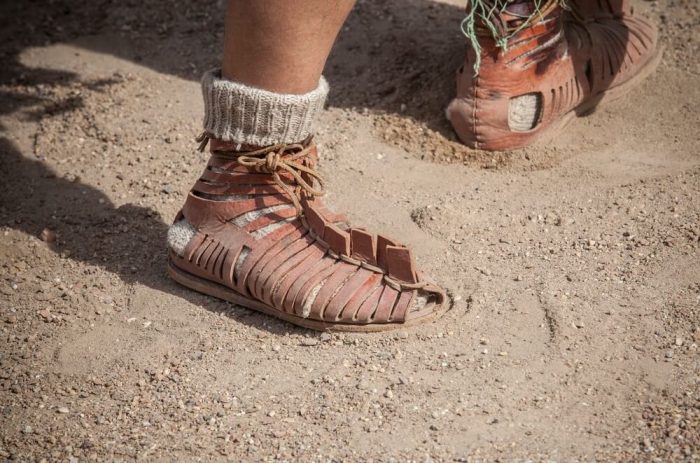
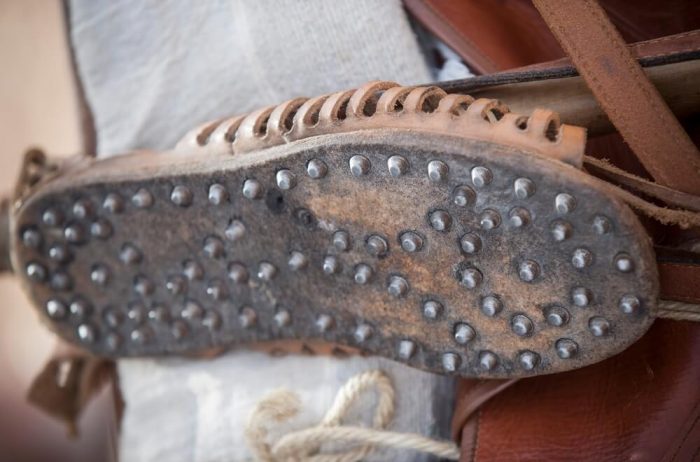
To understand the anatomy of modern English military boots, we must first look to the earliest military footwear deployed on British soil: the Roman caligae. Worn by legionnaires, these heavy-duty, open-toed sandals were constructed of robust leather and featured thick soles driven through with iron hobnails. These hobnails reduced wear during long marches and provided aggressive traction on soft earth.
However, the caligae were engineered for the Mediterranean. In the relentlessly muddy environment of the British winter, the open-toe design proved a severe liability, leading to frostnip and immersion foot. To insulate against the damp chill, Roman soldiers stuffed their sandals with raw wool wadding and woven socks.
Recognising this failure, the Roman military systematically abandoned the caligae in Britain by the late 2nd century AD, transitioning to a civilian-style enclosed boot known as the calceus. This critical shift from an open sandal to an enclosed leather boot established the foundational design principles for all subsequent military footwear in Northern Europe.
The 17th Century: From Cottage Industry to Standardisation
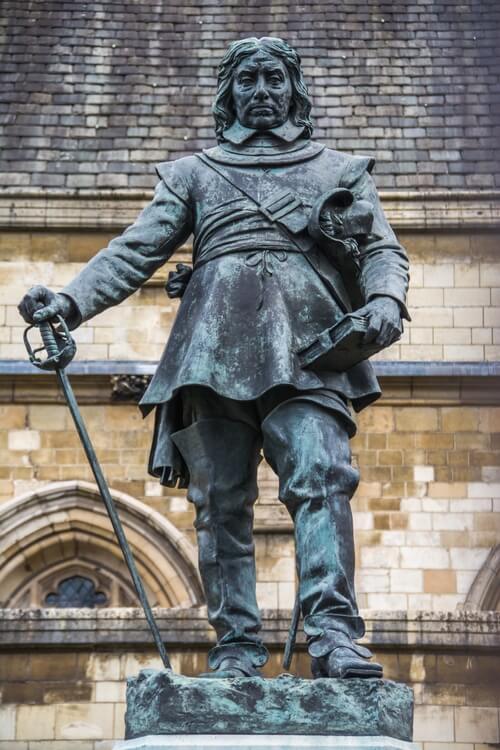
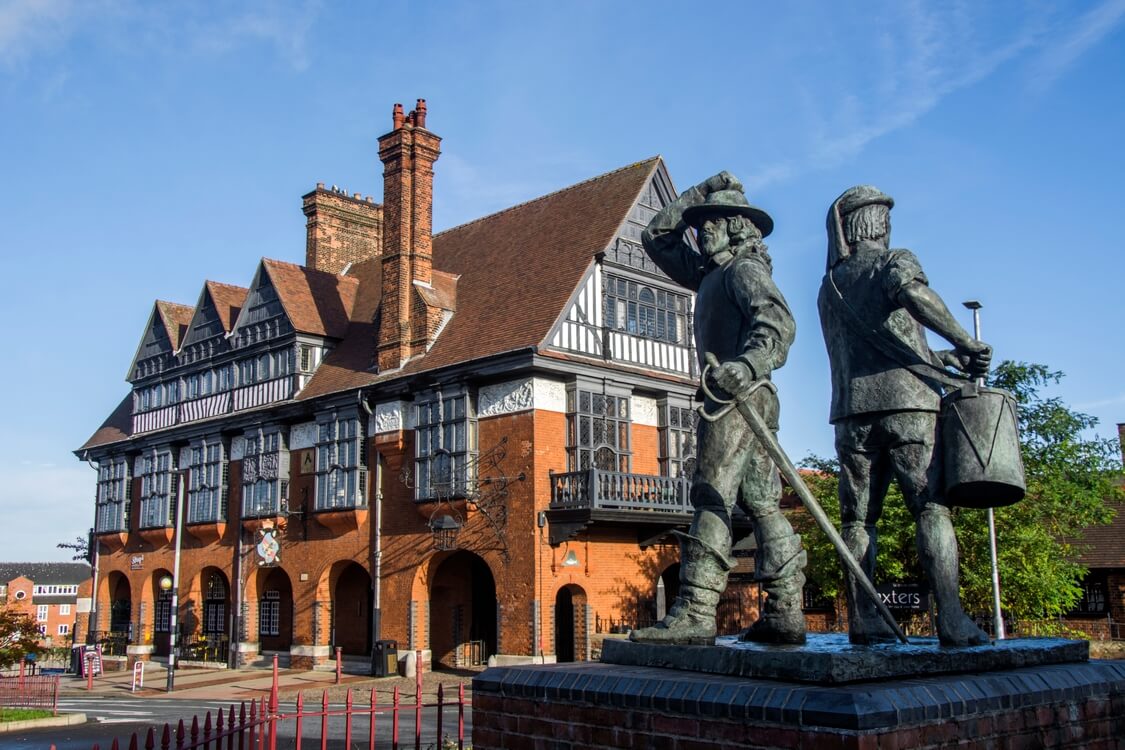
Following the decline of the Roman Empire, military footwear increasingly mirrored civilian patterns, and by 1640, the shoemaking trade had blossomed into a thriving cottage industry throughout Northamptonshire. However, the onset of the English Civil War transformed this decentralised craft into a proto-industrial military supply chain. Parliamentarian entrepreneur Thomas Pendleton was contracted to produce unprecedented volumes of English military boots, marking one of the first major mass-produced boot outputs in English history.
The 18th & 19th Centuries: Equestrian Dominance
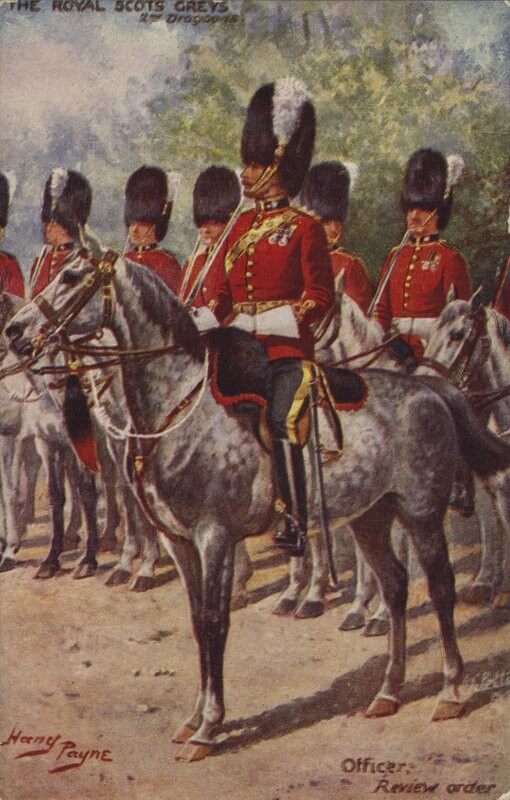
During the 18th century, the demands of the British military shifted toward cavalry operations, driving rapid changes in boot architecture to accommodate both riding and dismounted combat.
Evolutionary Timeline of Cavalry Boots
| Boot Style | Era | Primary Function | Key Characteristics |
| Jack Boot | Early 18th Century | Heavy Cavalry | Knee-high, thick, heavy, rigid leather engineered to protect legs from sabres and colliding horses. |
| Jockey Boot | Mid 18th Century | Dragoons / Infantry | Lighter, flexible upper with a stiffened sole for rapid dismounting and foot agility. |
| Hessian Boot | Late 18th Century | Officer Cavalry | Exceptionally soft calfskin, distinct ‘V’ cut front, decorative hanging tassel. |
The Genesis of the Wellington Boot
A change in terrain did not dictate the next turning point, but rather a shift in the cut of uniform trousers. The decorative tassel of the Hessian boot clashed with the newly fashionable, tight-fitting linen trousers of the early 1800s.
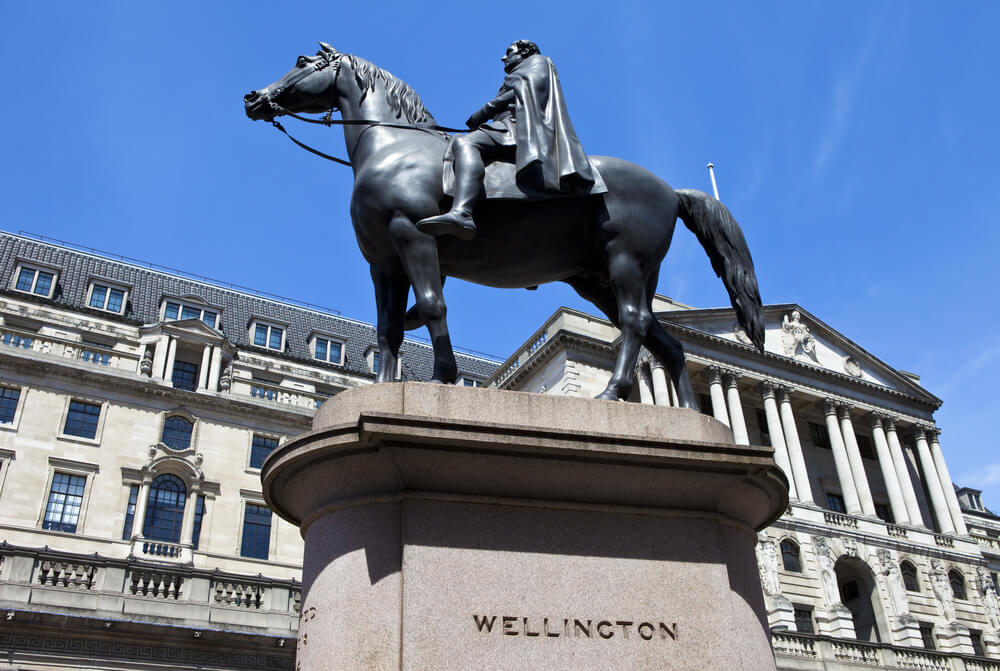
Arthur Wellesley, the 1st Duke of Wellington, sought a bespoke solution. He commissioned his personal shoemaker, Mr George Hoby of London, to modify the Hessian boot. Hoby executed a brilliant redesign: he removed the tassel, recut the pattern to fit closely around the calf, and utilised premium, heavily waxed calfskin for superior water resistance.
First appearing in public in 1817, the boots were rugged enough for combat yet refined enough for evening wear. The “Wellington boot” became a massive cultural phenomenon. While modern Wellingtons are synonymous with vulcanised rubber, the original 19th-century Wellington was a pinnacle achievement of traditional English leather shoemaking.
The Zenith of Shoemaking: The Ammunition Boot
As warfare shifted toward massive infantry engagements, the British Army required a universally durable boot for enlisted soldiers. By the 1860s, the lace-up ankle boot evolved into the most iconic piece of British military footwear ever produced: the Ammunition Boot.
Procured by the Munitions Board alongside explosive shells and gunpowder, they were deemed “ammunition quality”, a term that defined their indestructible nature.
The First World War: An Industrial Boom
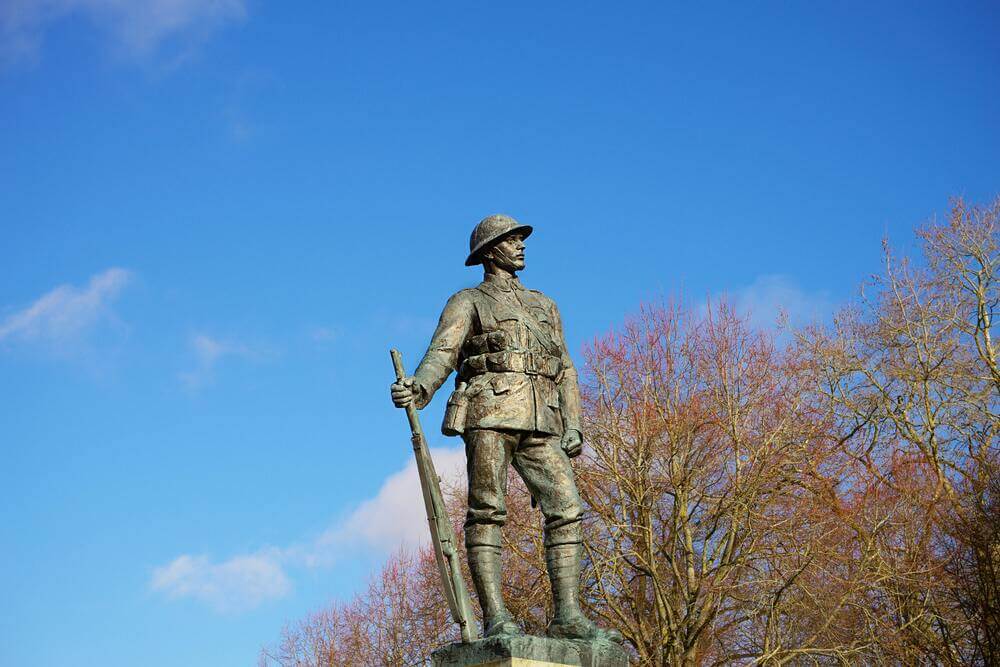
Trench warfare presented a horrific environment characterised by freezing mud and acidic water. The sheer scale of wartime production to combat these conditions remains a staggering industrial achievement. Between 1914 and 1918, the United Kingdom manufactured approximately 70 million pairs of boots for the Allied armies, 50 million of which were manufactured exclusively in Northamptonshire.
Here at Joseph Cheaney & Sons, our factory was kept intensely busy during the Great War, producing upward of 2,500 pairs of stitched and screwed boots per week. Despite this massive volume, traditional hand-finishing values were maintained, ensuring the British soldier was shod in superior-quality footwear capable of withstanding the rigours of trench warfare.
Global Conflict: The Second World War
By the time the Second World War erupted in 1939, unique logistical constraints necessitated immediate structural modifications to the Ammunition Boot. The pre-war variants were extraordinarily heavy, featuring a dense cluster of 25 iron hobnails. As severe metal rationing was imposed, the post-1941 pattern reduced the hobnail count to 15, and later just 13. Despite this, the fundamental Goodyear-welted construction and heavy, pebble-grained black leather uppers remained uncompromised.
A Glimpse into British History: The Barr Family’s 1942 Cheaney Boots
At Cheaney, we take immense pride in our heritage as an English shoemaker. Often, the true testament to our legacy is not just found in the shoes we create today, but in the historic footsteps of those who wore them before us.
We are deeply honoured to share a remarkable piece of wartime history, graciously brought to our attention by Mr Stephen Barr. Mr Barr recently unearthed a pair of meticulously crafted military boots issued to his grandfather, Leonard Barr (known to those who knew him as Len Barr), in 1942, proudly identified as an original Cheaney production from the Second World War.
Leonard Barr was a man of exceptional dedication, serving simultaneously in the Clacton Home Guard and the Civil Defence (ARP), a rare dual commitment during the war. Outside of his service, he owned a radio and electrical business on Clacton’s High Street. The beautiful photographs shared by the Barr family offer a fascinating window into life on the home front, capturing both the evolution of wartime uniforms and a poignant family legacy.
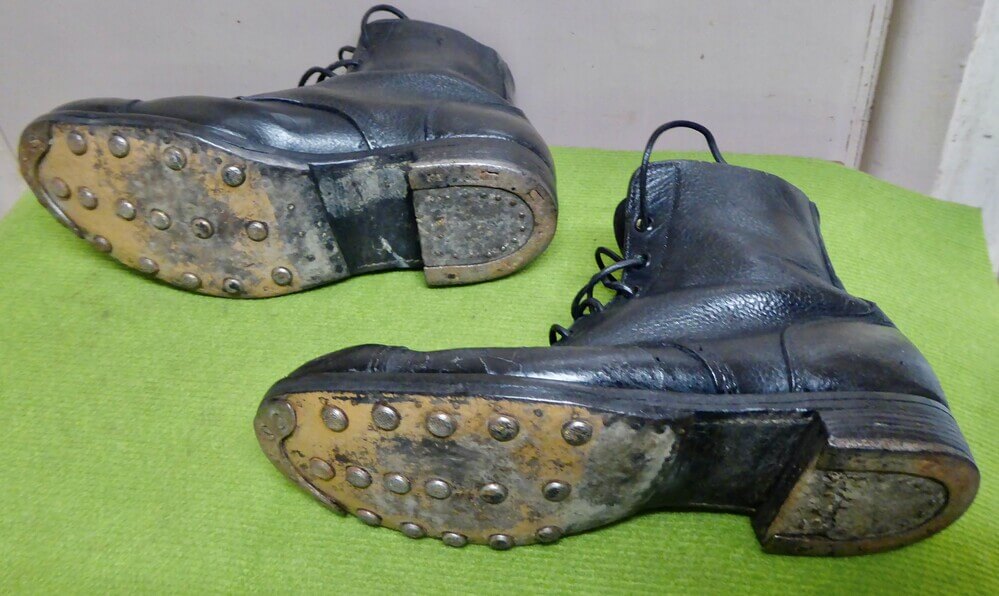
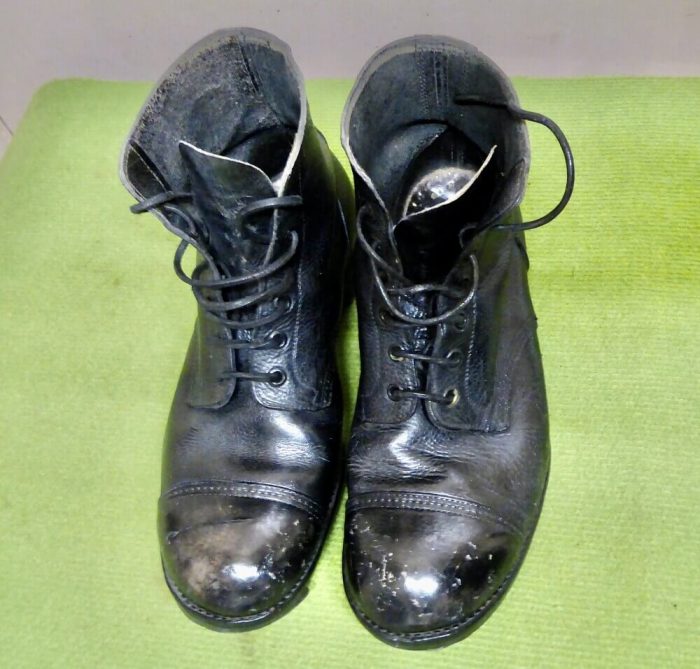
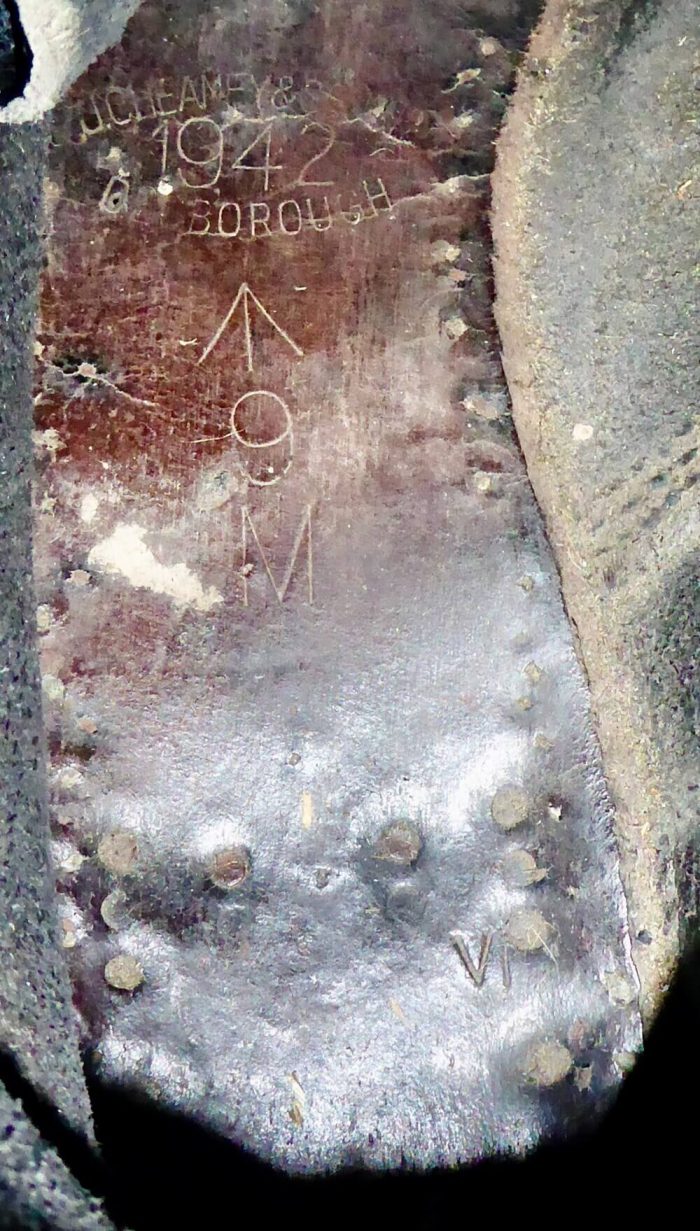
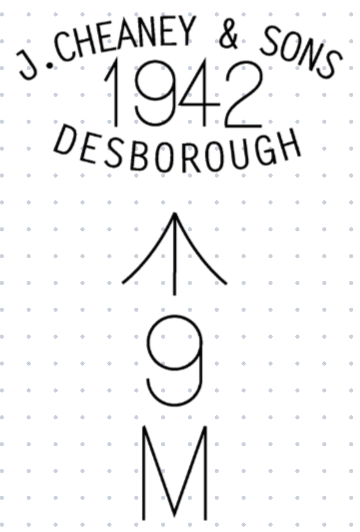
Caption: As you can see on the insole, the imprint reads: J. Cheaney & Sons, 1942, Desborough 9 M. The 9 M indicated the British sizing methods of the time. Boots were often stamped with the size (e.g., “9”), a width letter (e.g., “S” for Small, “M” for Medium, “L” for Large/Wide), and the year “1942”.
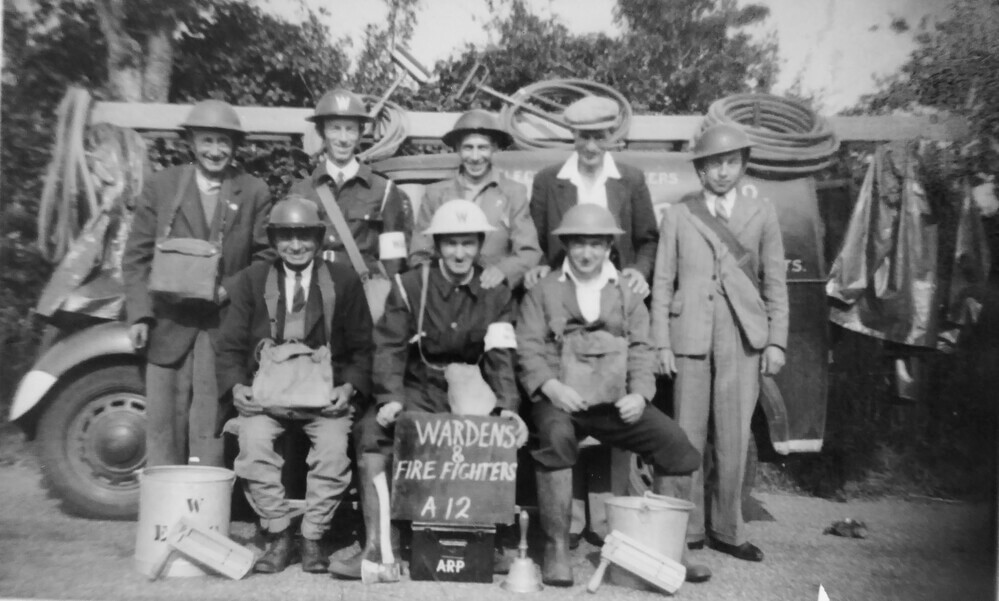
Caption: Circa 1940 – The Early ARP Uniform & The Family Business: This image features Mr Barr’s grandfather (back row, second from the left) wearing the early “overall” style of the ARP Civil Defence uniform in Clacton. Notably, the backdrop includes his Ford work van bearing the word “television.” His grandfather was a pioneer in his local community, owning a radio and electrical shop and installing an early television in the family home in the late 1930s before broadcasts ceased for the war.
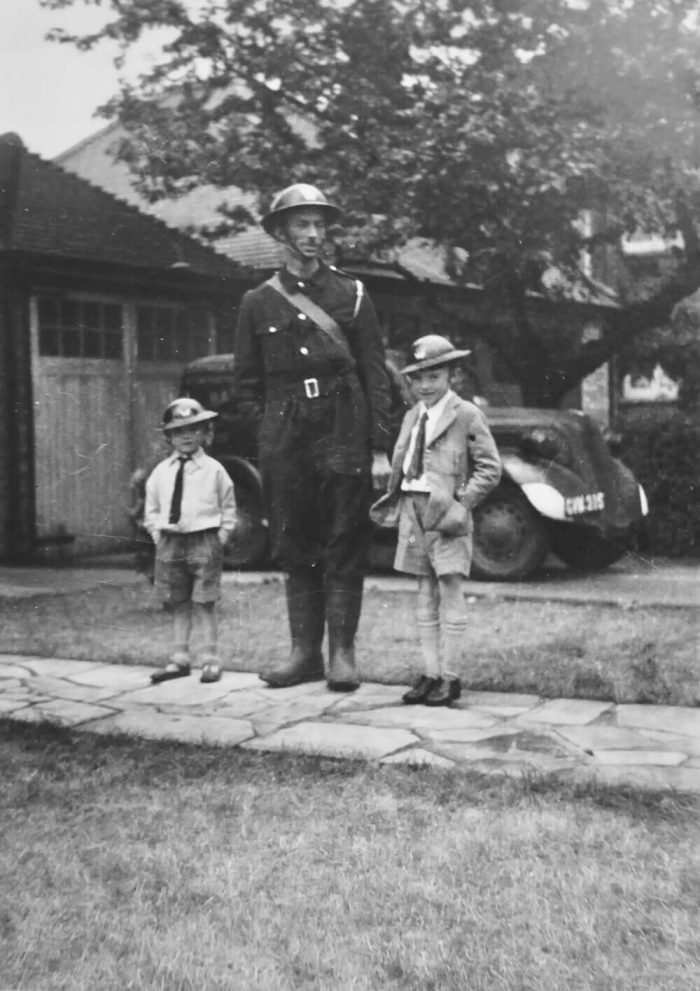
Caption: Circa 1941 – A Family Portrait on the Home Front: A touching photograph showing the grandfather in his early “overall” ARP uniform, flanked by his two sons, Stephen’s late uncle, John, on the left, and his late father, Leonard Barr, on the right. The young boys can be seen wearing toy tin hats made of wafer-thin steel, a poignant reminder of childhood during wartime.
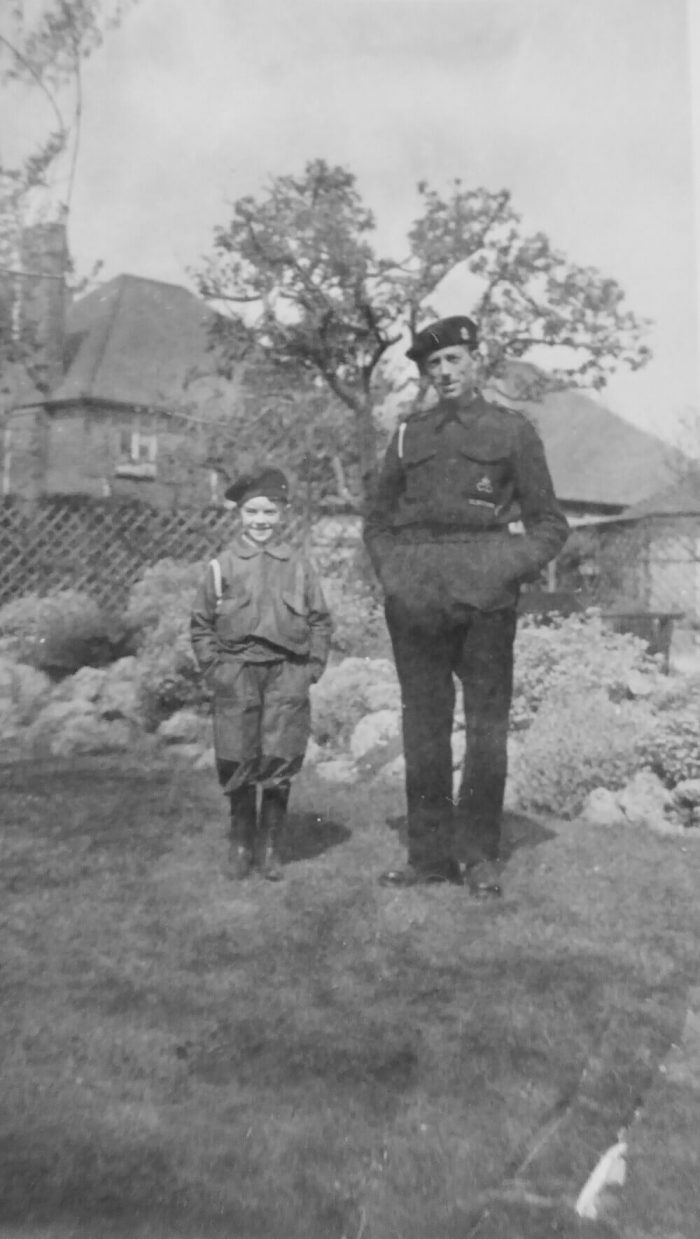
Caption: Circa 1942 – The Battledress & Cheaney Boots: This later photograph captures the grandfather in the updated Civil Defence “battledress” uniform. Distinctive for its extremely dark blue colour (contrasting with the standard army khaki), this uniform is worn alongside what are believed to be the very same 1942 Cheaney leather boots that remain safely in the Barr family’s possession today.
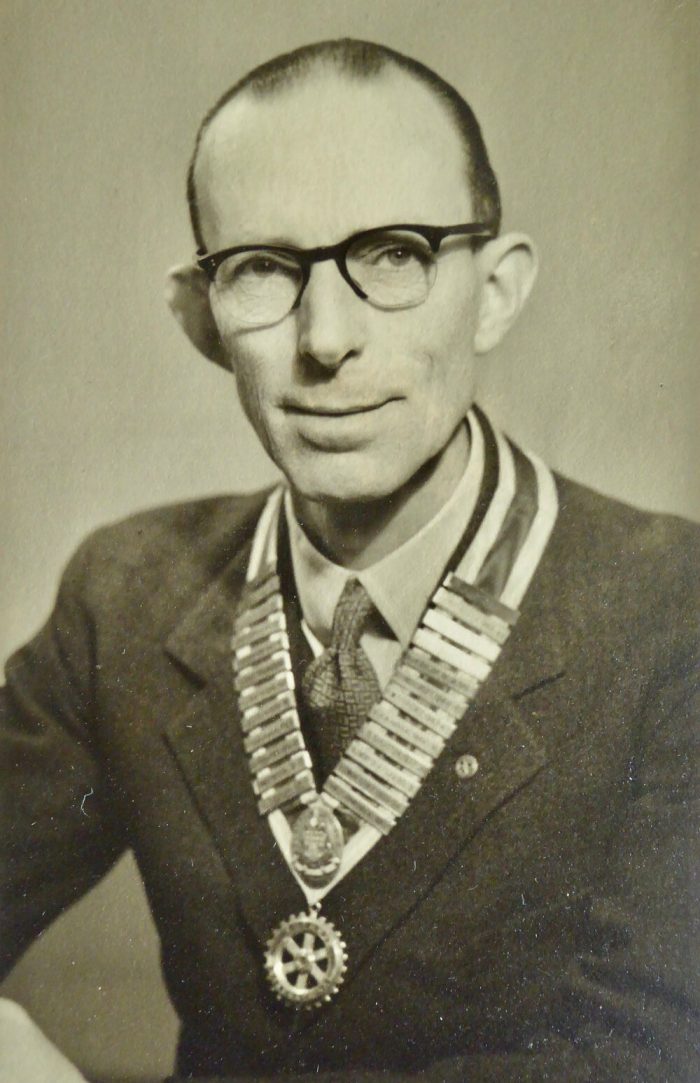
Caption: Official photo of Leonard Barr as Chairman of Clacton Town Council (Roughly the equivalent of a town mayor) in the mid 1950s.
We extend our sincerest gratitude to Stephen Barr for allowing Cheaney to document these magnificent boots and for sharing his grandfather’s enduring story of service and resilience with our community.
Specialised Footwear for Elite Units
The varied theatres of WWII drove the creation of highly specialised footwear:
Commando SV Boots: Engineered for stealth. The noisy, iron-studded leather soles were replaced with thick, heavily cleated rubber soles, allowing Commandos to scale rocky cliffs silently.
RAF ‘Escape’ Boots: Designed by MI9. These brilliant boots consisted of a standard black leather laced walking shoe concealed beneath a black, zip-up suede legging. Shot-down airmen could cut away the bulky suede upper, leaving them wearing civilian-looking black shoes to aid their evasion through occupied Europe.
Tropical and Arid Theatres
British Military Jungle Boots
Traditional oak-tanned leather proved disastrous in the humid jungles of Southeast Asia. Heavy cotton stitching rotted within weeks, and a lack of breathability led to rampant immersion foot. The conceptual breakthrough was the admission that total waterproofing in a jungle is impossible.
The resulting “Bata boots” were meticulously engineered to expel water. They featured breathable cotton canvas uppers paired with brass drain eyelets. As the soldier walked, the mechanical action of the foot trapped air and forced sweat and river water out through the eyelets. By the 1960s, Direct Moulded Sole (DMS) technology allowed rubber soles to be vulcanised directly to the canvas, eliminating welt stitching entirely.
British Military Desert Boots
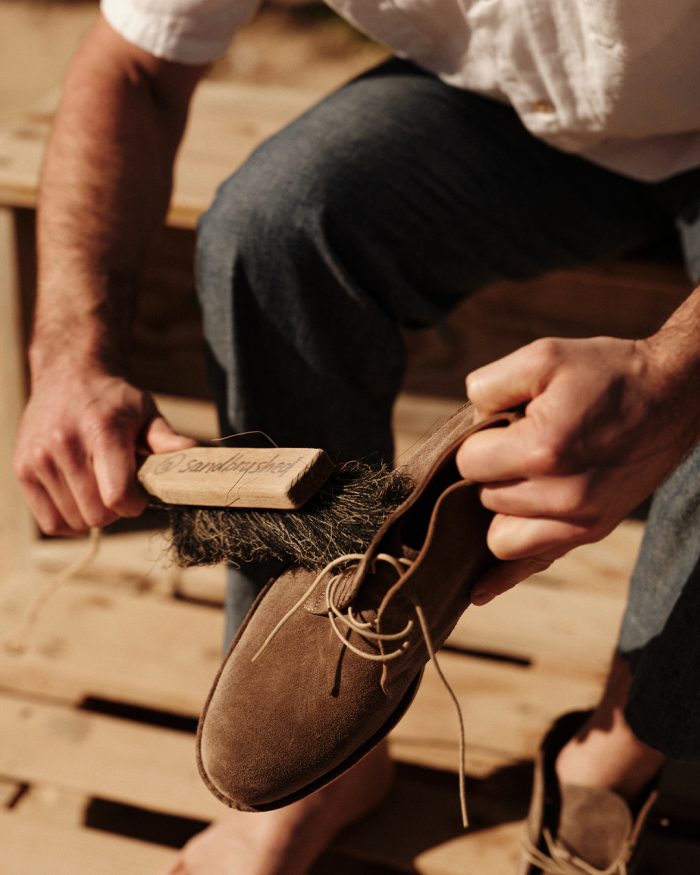
When the British Eighth Army deployed to North Africa, heavy black leather boots proved excruciatingly hot. Officers scoured local bazaars, discovering lightweight chukka boots crafted from rough-out suede atop soft crepe rubber soles.
The true operational shift occurred during the 1990 Persian Gulf War. The British military issued tan, suede-and-canvas desert boots. The rough-out suede required no polishing—a revolutionary change, as layers of wax polish on black boots effectively seal the leather’s pores, trapping body heat.
A guide to Chukka boots: What’s the difference between Chukka boots and desert boots?
Ceremonial Excellence & Modern Innovations
The George Boot
While operational footwear prioritises survival, British military parade boots represent the absolute discipline of the Armed Forces. Introduced in 1952, the “George Boot” is a sleek, minimalist ankle boot crafted from premium, smooth black calfskin. Its uninterrupted, seamless vamp provides a perfect, uncreased canvas for high-gloss polishing.
The Membrane Revolution and Beyond
A paradigm shift occurred with the British military combat boots, which incorporated modern mountaineering technology and advanced semi-permeable membranes. Today, the Ministry of Defence leverages a highly modular selection of brown combat boots, meticulously categorised by environmental threat and operational tempo.
Discover Traditional Military Boots at Cheaney
From the iron-studded calcei of Roman Britain to the meticulously handcrafted Ammunition boots rolling out of the great Northamptonshire manufactories, the history of military boots is a profound testament to life-saving innovation.
The traditional methods of English shoemaking, selecting the finest hides, expertly clicking patterns, and applying robust Goodyear welts, laid an unshakeable foundation. While modern synthetic materials have largely replaced heavy iron hobnails, the core ethos of military shoemaking remains absolutely unchanged: a boot must protect the foot’s physiological integrity and carry the wearer safely home.
Here at Cheaney, we’re still creating exceptional military-style boots in our Northamptonshire factory. Discover a boot steeped in British shoemaking history in our military boot collection.

Comments are closed here.