The Rebirth of British Craftsmanship: Why ‘Made in England’ Still Matters
In an era defined by rapid digital transformation and the fleeting nature of “fast fashion,” this year has ushered in a profound cultural correction. We are witnessing a global pivot toward what many are calling “The New Authenticity.” For the discerning individual, the luxury of today isn’t found in a logo but in a product’s lineage.
Nowhere is this more evident than in the world of high-value footwear. As the world becomes increasingly automated, the “human touch” has become a rare commodity. This article is the story of why shoes made in England continue to stand as the gold standard of global luxury and authenticity.
The Northamptonshire Legacy
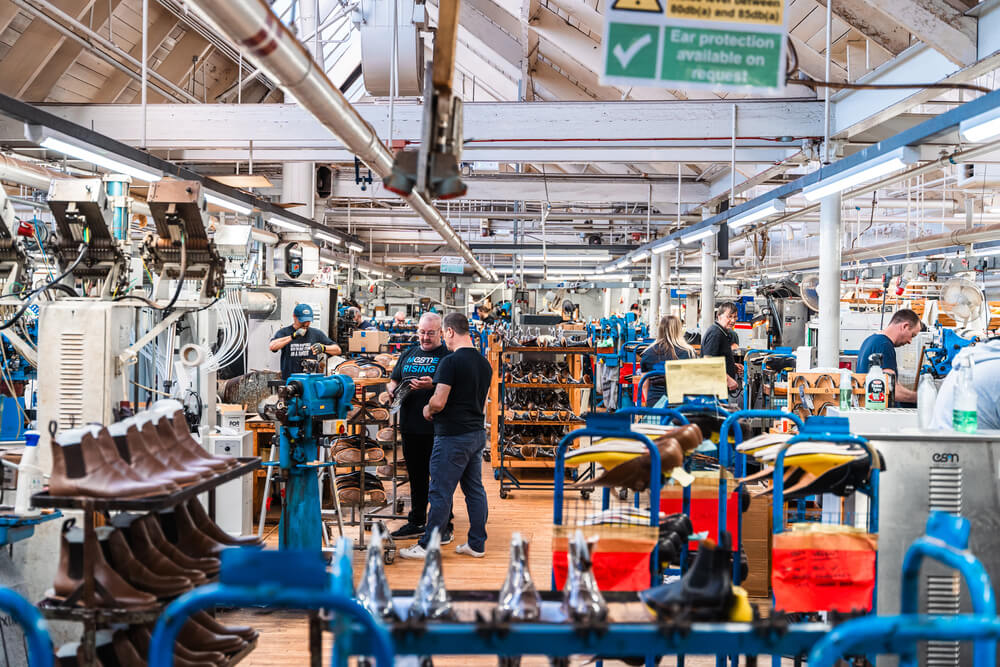
The heart of British shoemaking beats in a very specific corner of the world: Northamptonshire. Since the 12th century, this region has been the global epicentre of artisanal footwear. At Cheaney, we have been a part of this living history since 1886, meticulously crafting every pair in our Desborough factory.
Discover more about the Cheaney “Made-in-England heritage and the Northampton shoemaking tradition in our Cheaney history guide.
When you search for shoes made in Northampton, England, you won’t just find any old shoe shop; you will find a factory practising a specific, or gold standard, construction method: the Goodyear welt. This process, involving over 160 operations and taking up to eight weeks, ensures our shoes are not only durable but also fully repairable.
Learn more about the Goodyear-welted construction in our dedicated guide: What’s a Goodyear Welt?
Why Authenticity is the New Luxury
In today’s world, “Made in England” is more than a label; it’s a promise of traceability. With more global demand for ethical transparency, the best handmade shoes in England offer something mass production cannot: a soul.
When you buy Made-in-England shoes, here is what you get: the three pillars of English shoemaking.
1. Traceability: The pedigree of production
In the modern luxury market, “Where?” is just as important as “How?” For Cheaney, traceability isn’t a marketing buzzword; it is our operational reality. When we speak of knowing the workshop, we mean a level of radical transparency that only a self-contained English factory can offer. But how do we achieve this:
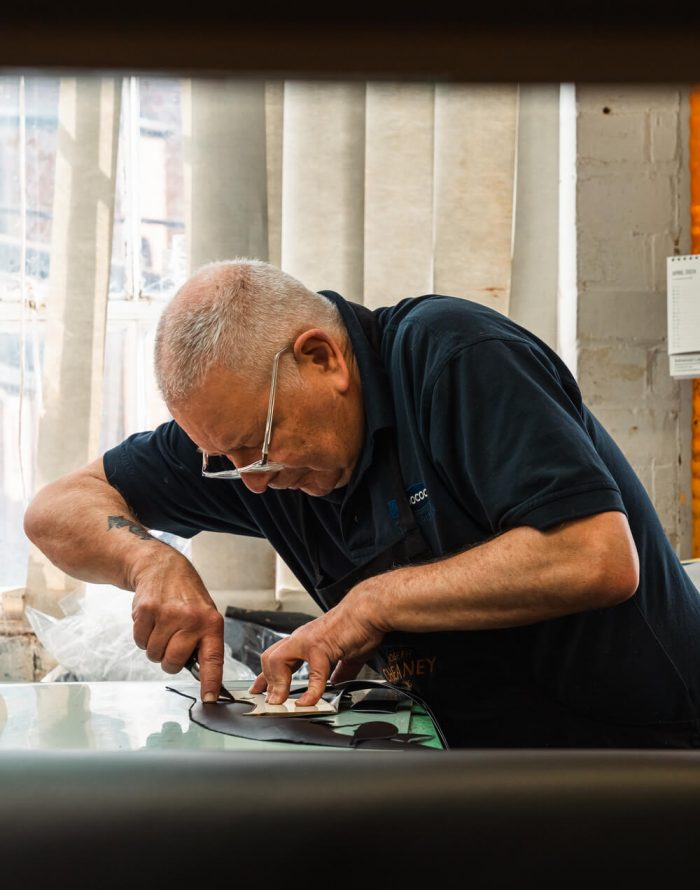
- Our single-roof philosophy: Unlike brands that outsource component production across continents, a Cheaney shoe undergoes all 200+ individual processes at our Desborough factory. From the “clicking” (cutting) of the leather to the final “burnishing,” every step happens under one roof. Learn more about our shoemaking process in our guide: “The Skilled Art of Shoemaking“.
- The craftspeople’s signature: Each pair carries the invisible signature of the craftspeople who handled it. There is a profound peace of mind in knowing that your shoes or boots weren’t assembled by an automatic machine, but lasted by a master shoemaker or crafted from a hand-operated cutting machine in Northamptonshire who has likely spent decades perfecting that specific tension and curve.
- Material provenance: Traceability extends to our raw materials. We source the finest calfskins from renowned European tanneries, most of which are members of the Leather Working Group, ensuring the leather’s journey is documented and ethical.
Find out more about where we source our leathers from in our Leather Guide.
2. Responsibility: The Ultimate “Green” Investment
The most responsible product is the one you can refurbish rather than throw away. While the world grapples with the environmental impact of “disposable” footwear, the British Goodyear-welted shoe remains the definitive antidote to the “throwaway” culture.
- A circular lifecycle: The genius of our construction lies in the welt, a strip of leather sewn around the shoe’s edge. A Goodyear welted shoe allows the entire sole to be removed and replaced without damaging the upper. At Cheaney, we offer a full refurbishment service that returns your well-worn favourites to their original factory moulds, replacing soles, heels, and even the cork filler so that you can wear them again and again.
- The “cost per wear” equation: A high-value English shoe is an investment in longevity. While a synthetic, glued shoe may last a season before heading to a landfill, a Cheaney shoe, properly cared for, can last 20, 30, or even 40 years.
- Natural materials: We prioritise leather, cork, and cotton, materials that are not only durable and breathable but are fundamentally more earth-friendly than the plastics found in mass-market footwear.
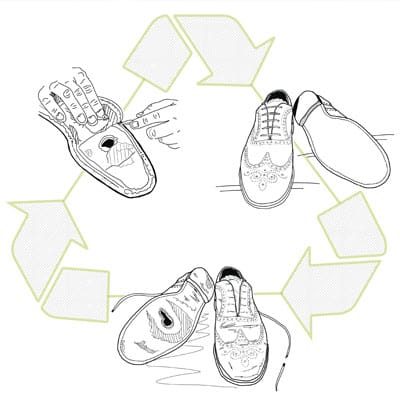
Read more about our sustainability promise in our Sustainability Guide.
3. Cultural value: A legacy on your feet
To wear a “Made in England” shoe is to step into a narrative that spans centuries. It is an act of cultural preservation that empowers the wearer with an understated, authentic confidence.
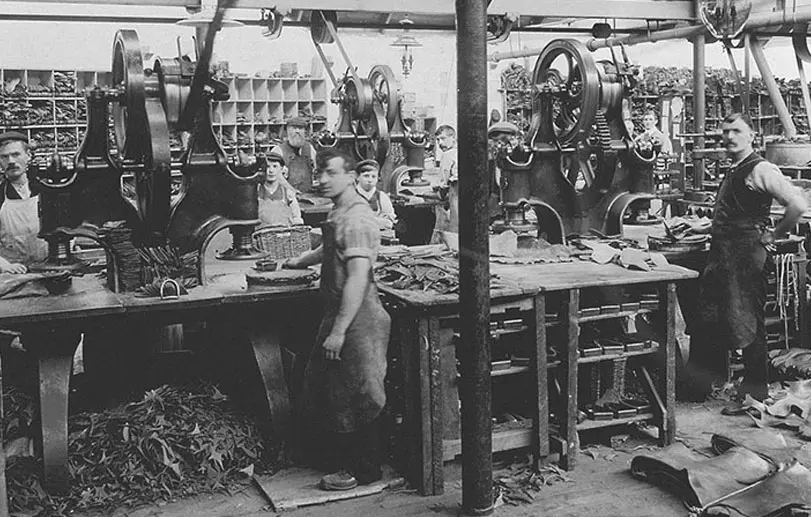
- The weight of history and adaptability: Since 1886, Cheaney has survived world wars, economic shifts, and the rise of the digital age, but we are nothing if not flexible and adaptable. While refusing to compromise on the “English Way”, we continue to do everything in-house, as well as looking to the future and the new generation by introducing resolable trainers. So, when you lace up your shoes or boots, you are supporting a lineage of British craftsmanship that is a cornerstone of our national identity and will remain for years to come.
- Empowerment through authenticity: There is a psychological “heft” to quality. A hand-finished shoe conveys a sense of grounding. For our customers, the value lies in the quiet luxury. You aren’t wearing a loud logo; you are wearing a piece of Northamptonshire history that speaks to those who know.
- The global standard: “English Made” remains the undisputed benchmark for formal and country footwear. Whether in London, Tokyo, or New York, a British-made shoe is a universal symbol of discerning taste and an appreciation for the “slow” arts.
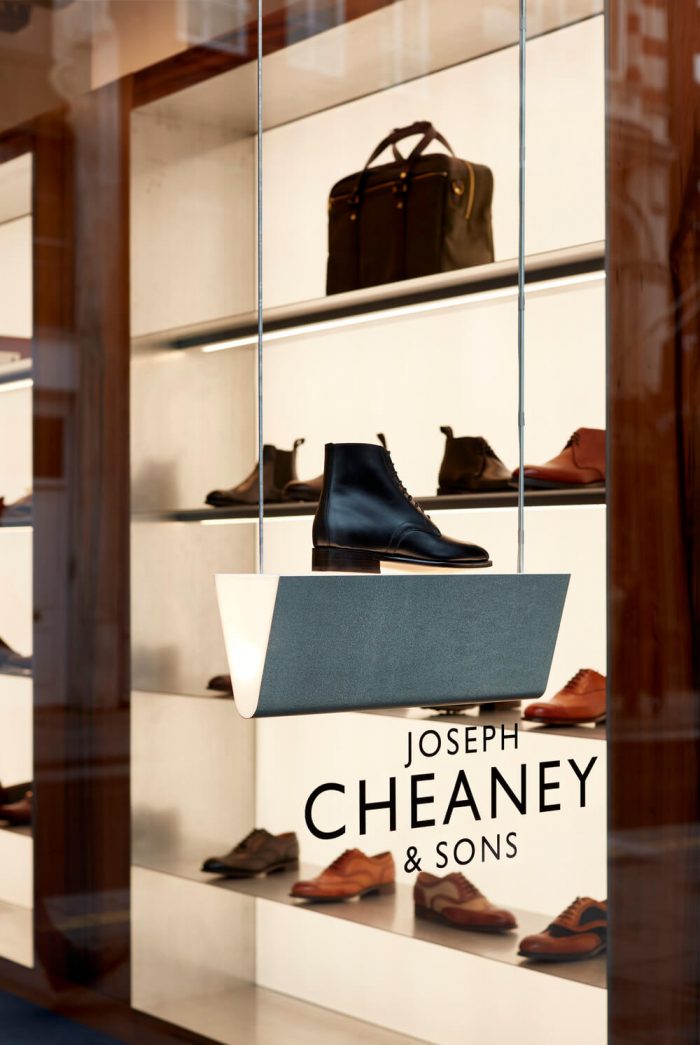
Finding Excellence at Cheaney
For those looking to invest in their first (or tenth) pair of heritage footwear, the landscape can be vast. So, whether you are browsing for shoes made in England online or visiting a flagship boutique, look for these hallmarks of quality:
- Full-grain leathers: Materials that age with grace and develop a unique patina. Find out more about full-grain leather in our guide: What is Full-Grain Leather, and How to Care for it?
- Channelled stitching: Evidence of a master craftsman’s steady hand.
- The Northampton seal: A guarantee of centuries-old expertise.
The Verdict: Why the world still looks to us
The reason the world continues to seek out the best shoes made in England is simple: we do not cut corners. In a world of “good enough,” British craftsmanship remains “the best it can be.”
At Cheaney, we blend this 140-year heritage with modern innovation, ensuring that while our methods stay traditional, our designs remain timelessly relevant for the modern gentleman and woman.
Why not browse some of the best shoes made in England in our complete collections?
Your next read:

Comments are closed here.