British vs Italian Men’s Dress Shoes: Which Shoemaking Tradition is Worth Your Investment?
When investing in fine gentlemen’s footwear, you might have, quite inevitably, narrowed your choice to the two undisputed heavyweights in the craft: English vs Italian shoemaking. Both are exceptional in their own right and closely matched in prestige, but how do you choose between them or know which shoemaking tradition is right for you?
We’ve created this guide to help you solve this very conundrum. We will break down the key differences between these two iconic traditions, including construction methods, styling and longevity, to help you decide which footwear best suits your wardrobe, climate and lifestyle.
English vs Italian shoes: The quick verdict
If you don’t have time to get into the nitty-gritty, here is our quick verdict. If you want to prioritise unparalleled durability, weather resistance, a style steeped in heritage, and timeless elegance that will last for decades, British shoes are the superior choice.
However, if you are looking for more featherweight, highly flexible soles and trend-driven aesthetics for a warm, dry climate, Italian shoes can be an excellent alternative or addition to your shoe collection.

Italian vs English shoes: The traditions explained
British Shoemaking: Heritage and Endurance
British shoemaking, particularly the legacy born in Northamptonshire, is defined by its unwavering commitment to structure, durability, and timeless style. At Cheaney, we have proudly upheld this tradition, crafting shoes purely in England since 1886.
English shoes are traditionally built using the Goodyear welt method, a labour-intensive process that ensures the footwear is highly water-resistant and resolable up to three times, whereas in a typical Italian construction, ‘Blake Stitched‘, they can only be repaired once whilst maintaining the integrity of the shoe. They are designed to be an enduring companion, ageing beautifully over decades while providing sturdy support. They appeal to the discerning individual who values quiet confidence, long-term investment, and classic proportions.
Italian Shoemaking: Flair and Flexibility
Italian shoemaking is deeply influenced by the Mediterranean climate and a culture of sprezzatura or “the art of effortless grace”. Italian shoe designers and makers typically favour the Blake stitch or Blake-Rapid construction, which allows for a lighter, more flexible, and closer-cut sole.
The leathers used are often incredibly soft, and the designs lean toward the flamboyant, featuring elongated toes, sleek profiles, and vibrant, hand-painted patinas. Therefore, the Italian shoe appeals to those looking to make an immediate sartorial statement, prioritising comfort and striking aesthetics over heavy-duty longevity.
British vs Italian shoes: The head-to-head breakdown
Construction Methods: Goodyear Welt vs Blake Stitch
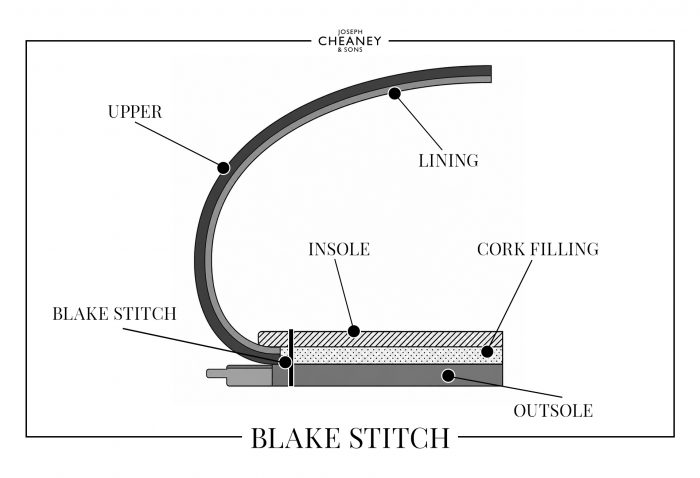
When comparing English and Italian shoemaking traditions, the most apparent distinction lies beneath the surface. Italian shoes predominantly use the Blake stitch, in which the upper, insole, and outsole are sewn together with a single stitch. This construction makes the shoe highly flexible right out of the box and allows for a very sleek profile. However, it also means moisture can more easily wick up through the sole, and resoling can be a complex process that risks damaging the upper over time.
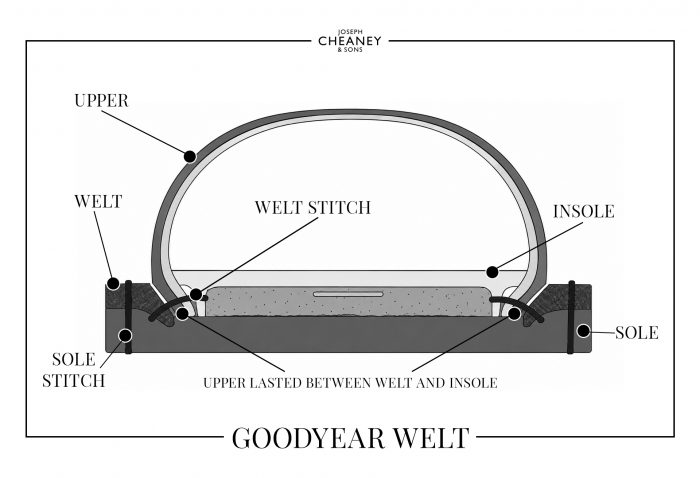
On the other hand, British shoes rely heavily on the Goodyear welt. This technique involves stitching a strip of leather (the welt) to the upper and insole, then stitching the outsole to the welt separately. This method allows for a cavity which is filled with cork that moulds perfectly to your foot, along with a much more robust construction. The Goodyear welt provides superior water resistance and allows our craftspeople to resole the shoe multiple times without ever compromising the upper, ensuring your footwear can truly last a lifetime.
Style and Aesthetics: Timeless Proportions vs Sleek Profiles
Italian shoe design is characteristically bold. You will find narrower lasts, longer toe boxes, and softer, thinner leathers that contour elegantly over the foot. They are undeniable statement pieces, often finished with elaborate burnishing or striking colours designed to catch the eye.
By contrast, British style is rooted in balanced, timeless proportions. The lasts are generally more rounded and structured, creating a solid, grounded silhouette. Whether it is a full brogue or a sleek Oxford, the English shoe aesthetic does not chase fleeting fashion trends. Instead, it anchors a wardrobe with a classic elegance that looks just as appropriate today as it did a century ago.

Climate and Longevity: Form vs Function
If you spend your days strolling dry, sun-drenched piazzas, Italian shoes might be the best option for you. The lightweight construction and soft leathers breathe beautifully in warm weather. However, in colder, damper environments, they quickly show their vulnerabilities, as thin soles and Blake stitching are no match for wet pavements.
In contrast, British shoes are built to withstand the elements of the British climate. The heavier-weight calf leathers, combined with the substantial Goodyear welt or Veldtschoen construction and rubber sole options, make English footwear uniquely equipped to handle the odd shower and uneven ground while maintaining its refined appearance. They are an investment that pays dividends year after year, regardless of the forecast.
English vs Italian shoes: Detailed comparison table
| Feature | British Shoes (Cheaney) | Italian Shoes |
| Primary Construction | Goodyear Welt (highly durable, resolable) | Blake Stitch (flexible, sleek) |
| Sole Profile | Substantial and robust with weather-resistant options | Thin, close-cut, and highly flexible |
| Aesthetics | Classic, structured, and timeless proportions | Elongated, sleek, and trend-led |
| Weather Resistance | Good; built for damp and varied climates | Poor; moisture easily penetrates the Blake-stitched sole |
| Longevity | Decades with proper care and factory resoling | Moderate; softer leathers and soles wear faster |
| Break-in Period | Requires a brief period to mould the cork to the foot | Generally soft and comfortable immediately |
Frequently asked questions
We know there are lots of questions surrounding these two shoemaking techniques, so here are the most common ones answered.
Are Italian shoes the best?
Whether Italian shoes are “the best” or not depends entirely on what you require from your footwear. Italian shoemakers are undisputed masters of aesthetics, flair, and lightweight construction. Plus, with a construction like the Blake stitch, these shoes give you an exceptional, sleek, close-cut sole and remarkable flexibility. Coupled with extremely soft leathers and elongated, striking silhouettes, Italian shoes are beautiful statement pieces ideal for warm, dry Mediterranean climates.
However, if your definition of “the best” prioritises structural integrity, weather resistance, and longevity across generations, Italian shoes may not meet your needs. Their thinner soles and Blake-stitched construction offer little protection against rain and dampness, and they cannot withstand the rigorous, multiple resoling processes that an English shoe can.
Why are English shoes so good?
English footwear is globally revered for its uncompromising foundation in longevity, structure, and meticulous craftsmanship. But at the heart of this reputation is the Goodyear welt, a highly skilled construction method perfected in Northamptonshire.
Unlike mass-produced footwear, a Goodyear-welted shoe features a highly water-resistant seal and a cork-filled cavity that moulds precisely to the wearer’s foot over time, offering bespoke-level comfort. But most importantly, this method allows the shoes to be entirely dismantled and resoled multiple times without damaging the upper leather.
When you purchase pure English shoes crafted in our factory, a tradition we have proudly upheld since 1886, you are not merely buying a seasonal accessory. You are investing in decades of heritage and a robust, timeless companion that ages gracefully and serves you for a lifetime.
The Final Verdict: Who Should Buy Which?
Buy British-made shoes if…
- You view footwear as a long-term investment. You want shoes that can be meticulously refurbished and resoled for decades, keeping them in your rotation for a lifetime.
- You live in a varied or damp climate. You need footwear that will withstand the rain without compromising on elegance or letting water seep in.
- You prefer a timeless style. You want a classic, traditional silhouette that will never look out of fashion, whether paired with a bespoke business suit or weekend tweed.
Buy Italian-made shoes if…
- You live in a consistently warm, dry climate. You need maximum breathability and a featherweight feel to navigate high temperatures comfortably.
- You want immediate flexibility. You are willing to trade long-term durability for a shoe that requires less break-in time right out of the box.
- You prefer a striking aesthetic. You want your footwear to be the boldest, most trend-forward statement piece of your outfit.
Find the perfect men’s dress shoes for you
Both nations produce exceptional footwear, but they serve entirely different masters. While Italian shoes offer undeniably beautiful, warm-weather style and a comfortable, lightweight flair, the steadfast construction and timeless appeal of British shoemaking remain unmatched for those seeking enduring quality and resilience. At Cheaney, we seamlessly blend our heritage with meticulous craftsmanship to create British men’s dress shoes that don’t just look the part; they will carry you through decades of elegant wear.

Ready to experience purely English shoemaking?
Explore our British-made men’s classic footwear collection for indisputable classic style and undeniable resilience, or read more about the skilled art of shoemaking here at Cheaney.

Comments are closed here.