Art Meets Craftsmanship: The Timeless Appeal of Lino Printing

Do you remember potato printing at primary school? That slightly chaotic mix of poster paint, halved vegetables, and the thrill of seeing your design appear on paper? For most of us, it remained a fond childhood memory. For Sarah Cemmick, working with rubber carving blocks and lino tapped into that same simple joy, but developed into something rather more a refined work of art.
Cheaney Christmas Windows
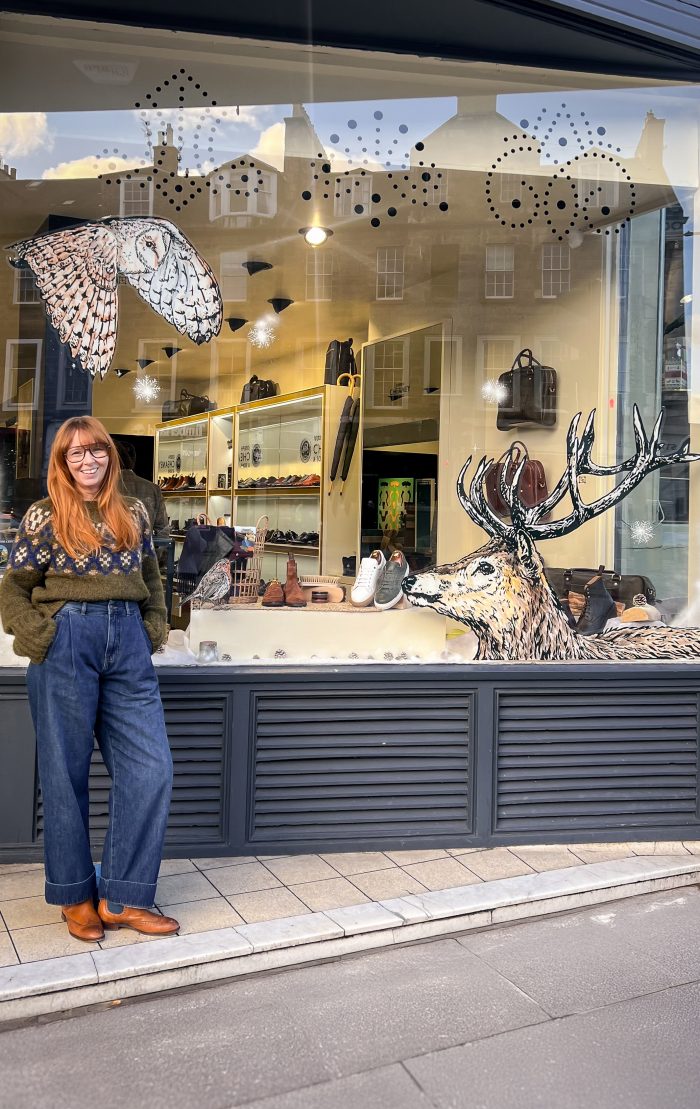
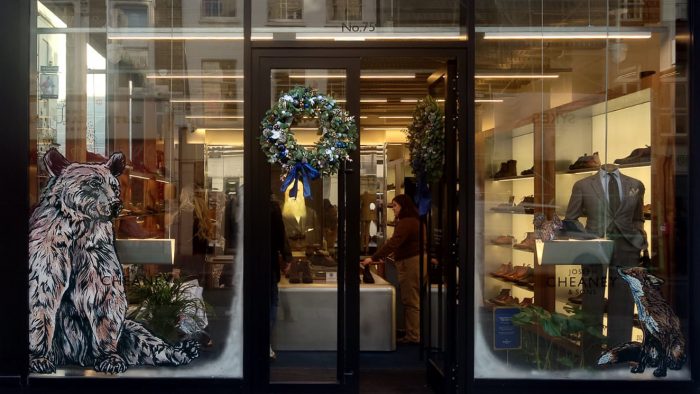
This Christmas, we’ve collaborated with Sarah to create our window displays, marking our first venture into this kind of artistic partnership. Watching her wildlife designs take shape has revealed unexpected parallels between her world and ours.
What is Lino Printing?
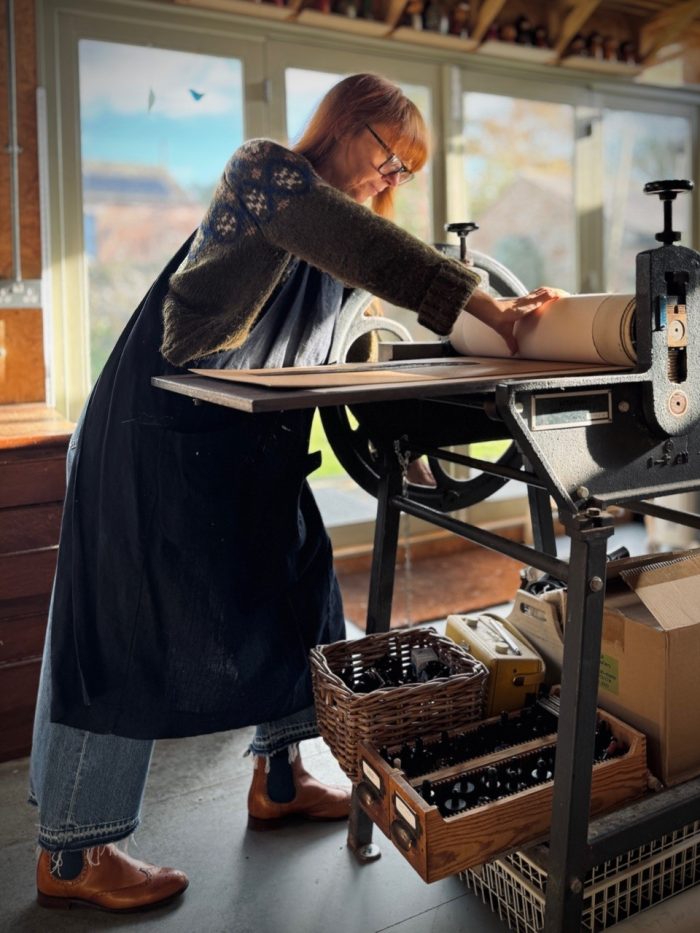
Lino printing is a relief printmaking technique: a design is carved into a linoleum block, the raised surfaces are inked, then pressed onto paper or fabric to transfer the image. The carved-away sections remain blank. The result can range from bold, graphic designs with stark lines to intricate, detailed images, often with a distinctly monochrome, vintage quality.
The technique emerged in the late 1800s, shortly after linoleum was invented as a floor covering. Artists began using it for printmaking around the 1890s, and it gained prominence in the early 20th century, particularly with Germany’s Die Brücke movement and later with Britain’s Grosvenor School. Picasso and Matisse both worked extensively in the medium.
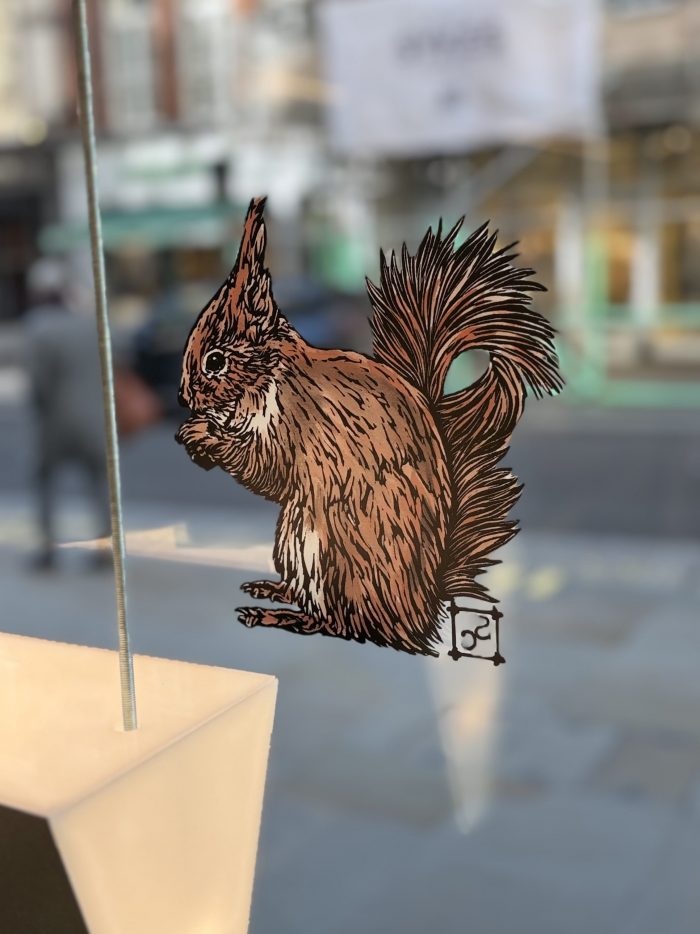
What makes linoleum particularly suitable is its lack of grain, allowing for greater precision and freedom in carving. Sarah hand-colours selected prints with watercolour, adding an extra layer of depth and individuality to each piece.
& ‘Mr Fox Strikes again’, ‘Nutkins’ & ‘Robin’
Thirty Years In
Sarah graduated from the University of Sunderland in Environmental Illustration in 1996. Her final degree piece was an eight-foot-tall ostrich rendered entirely in lino, which sparked her passion for the medium. With support from the Prince’s Trust, she began printmaking full-time.
She still uses the same set of tools from her very first linocut. Thirty years on, those tools have become old friends. Working from her studio in Cumbria, built in the spot where a fruitless apple tree once stood, Sarah creates prints using traditional techniques and linseed oil ink. Her work appears in private collections around the world and has earned commissions from the National Trust, RSPB, Game & Wildlife Conservation Trust, and Holland & Holland in Mayfair.
The studio was designed with her artist husband, David and built by a joiner friend. It sits fifteen steps from her back door, overlooking her garden. A Little John etching press occupies the centre, surrounded by four plan chests used for paper cutting and inking surfaces, storage for framed work, and a substantial pitch pine cupboard housing her art card collection.
The Rural Context
Living in rural Cumbria means Sarah’s subjects often come to her. Hares, red squirrels, badgers, and numerous bird species are part of daily life. She shares her studio days with Bonzo, a miniature long-haired dachshund, and Tinker, a rather characterful ginger tom.
When asked which works feel most like ‘hers’, Sarah points to her Wren and Hare pieces. There’s something beautifully British about both creatures, perfectly at home in the countryside.
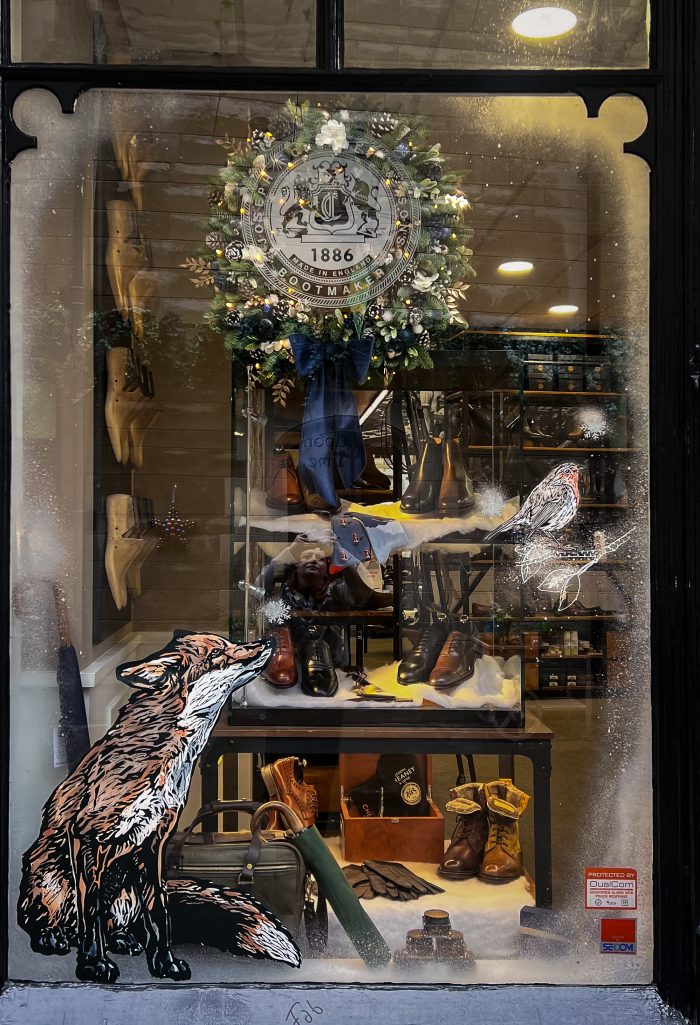
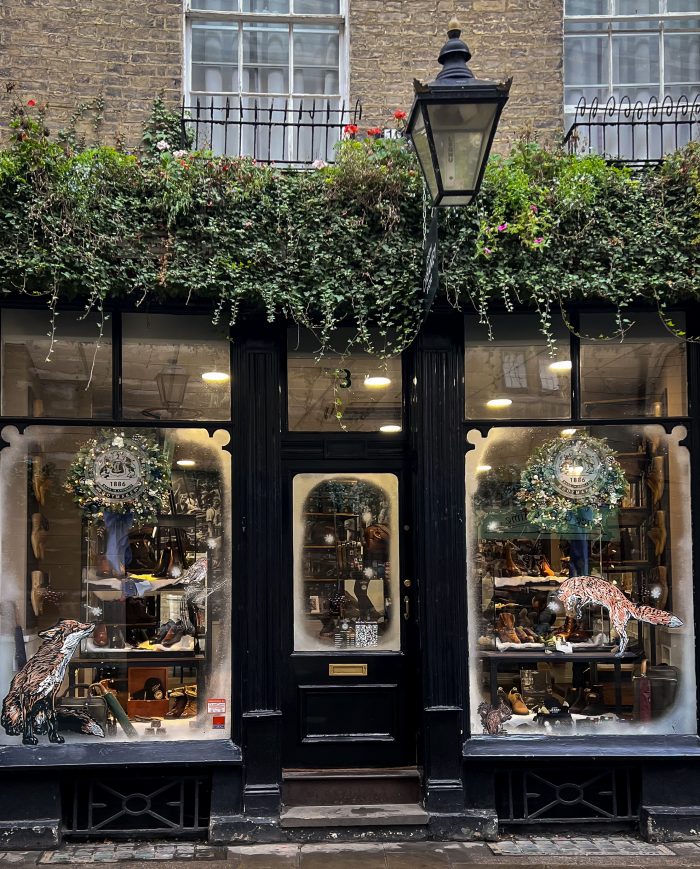
‘Mr Fox Strikes again’, ‘Nutkins’ & ‘Robin’
Shared Ground
The connection between Sarah’s work and ours goes beyond handcraft and traditional technique. Sarah and her husband David have been wearing our shoes for over twenty years. It’s the kind of loyalty that speaks to an appreciation for things made to last, made properly.
In lino printing, every cut shows in the final work. There’s no covering up mistakes. In traditional shoemaking, the same principle applies. The welt stitching, the cork filling, the leather insole: each element matters. Each contributes to how the shoe wears over time. Both crafts show their quality gradually, through years of use.
The Wildlife Series
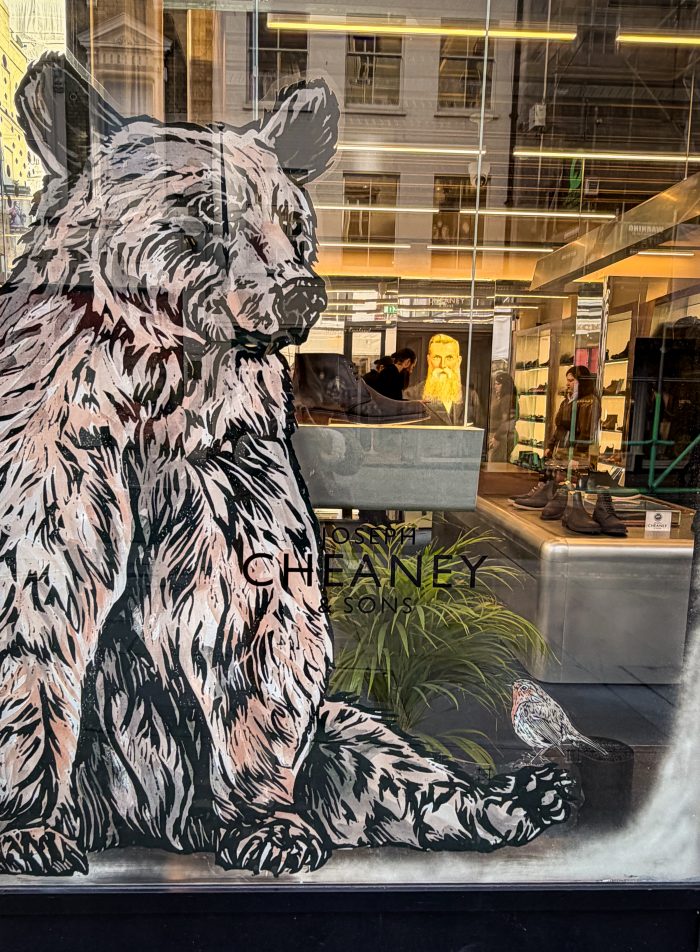
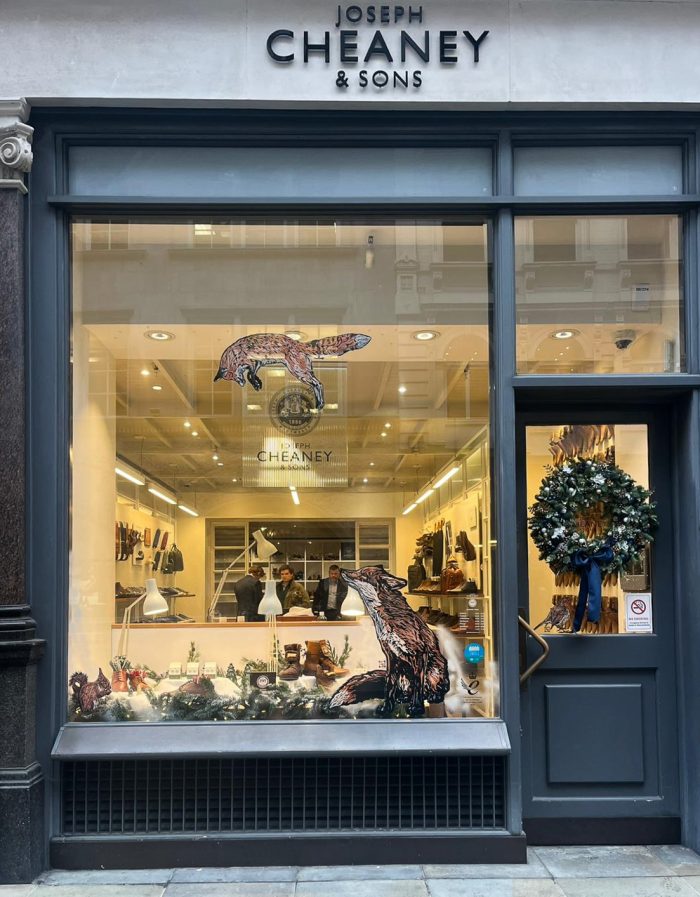
For our Christmas windows, we’ve used Sarah’s wildlife designs, scaled up to fill the space. It’s the first time we’ve collaborated with an artist in this way. The designs possess a distinctive lino-print quality: bold and clear from a distance, full of detail up close. Hand-coloured with watercolour, each print is subtly different. It’s an approach that feels familiar to us, working within a framework while leaving room for character.
Where to See More
Sarah’s work can be viewed online at sarahcemmicklinocuts.com or her Instagram @sarahcemmicklinocuts. In person at Harvey & Woodd Edinburgh, The Biscuit Factory Newcastle, Gallerina Darlington, Rheged Gallery Penrith, Courtyard Gallery Appleby-in-Westmorland, Platform Gallery Clitheroe, Game and Wildlife Trust online gallery, and The Witchery Edinburgh. Her prints also appear at shows including The Hepworth Print Fair, Great North Contemporary Craft Fair, and Manchester Art Fair.
Sarah and David have been customers of ours for over twenty years. See how she styles them at @sarahandthepinkdoor Not out of habit, but because they understand what goes into making something properly. They’re the kind of people who have their shoes resoled rather than replaced, who appreciate how good leather improves with age, who know there are still years of wear to come. When you care about how things are made, you tend to recognise it in others, whatever their craft.
Sometimes the best collaborations happen when you discover you’ve been working to the same principles all along.

Comments are closed here.