A History of Monk Strap Shoes: A Cheaney Perspective
There are very few shoes that can claim a lineage stretching from the medieval world to the modern wardrobe, but the monk shoe is one of them. Defined by its distinctive single or double-buckle fastening rather than laces, it has remained remarkably adaptable: formal when required, expressive when the moment calls for it. For us at Cheaney, it has long been a foundation for both innovation and tradition, and a surefire indication of sophisticated taste.
From humble beginnings to a wardrobe staple, learn about the history and origins of the monk strap shoe. Take a step back in time as we illuminate the origins of the monk strap shoe, its rise to popularity, and its evolving style. We also discuss how it has influenced modern men’s fashion trends and became a favoured alternative to Oxford and Derby shoes.
Plus, to celebrate your 140th anniversary, we will look back at some of the most enduring monk shoe styles from our collection over the years and how they have evolved.
Jump straight to:
The Monk Shoe at Cheaney: Two straps, Forty Years, One Story
Your Monk Strap Shoe FAQs: Answered
The Monk Strap Shoe’s History
Origins: Why is it called a monk strap?
The monk shoe’s origin story is practical rather than sartorial. The single monk strap shoe gets its name from its monastic origins. Although there is no historical record of the invention of monk straps, European monks fashioned them in the Middle Ages as a more practical and protective footwear alternative to the open sandals they wore within their communities, for manual outdoor labour and on rough terrain. The shoe featured a closed-toe design with a buckle, resembling a closed-toe sandal.
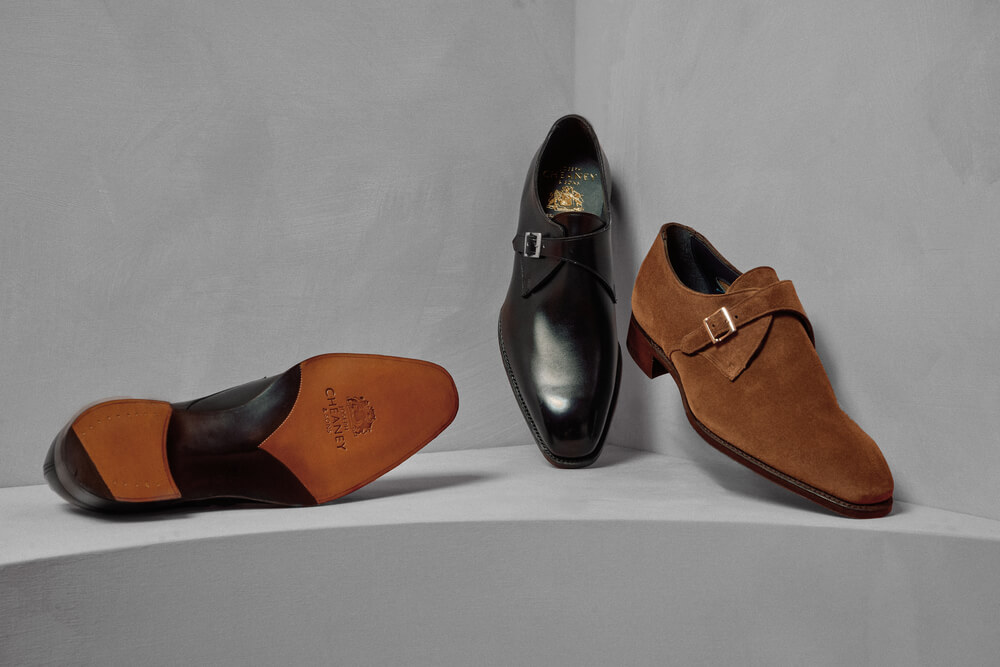
The Monk Strap Shoe Timeline
The 17th century
In the 17th century, monk shoes were popularised by the French aristocracy, who appreciated their comfort and style. Early versions of the monk shoe featured a single buckle and were often made from high-quality materials such as leather and velvet.
The 19th century
The English shoemaker Edward Green reinvigorated the monk shoe design in the late 19th century, and it resembles what we know today: the double-monk-strap shoe with two buckles. During this time, the monk shoe gained popularity in England, and it was often worn by gentlemen on formal occasions.
This trend spread across Europe, proving particularly popular in Italy and Portugal. It eventually made its way to America, popularised by brands such as John Lobb, Church’s, Paul Evans, Prada, and Kurt Geiger.
The 20th century
In the 20th century, the double monk strap’s popularity among men increased as a stylish, practical alternative to Oxford shoes. Often worn with a three-piece suit or blazer and trousers, Monk shoes continued to make waves in the fashion world.
1920s-30s
The double monk-strap style became particularly popular in the 1920s and 30s, when it was worn by Hollywood stars such as Clark Gable and Cary Grant, a time when British menswear began its long pivot away from Edwardian formality.
Returning from the First World War, a generation of men sought clothing that signalled ease and modernity, and the monk shoe occupied this precise gap in the wardrobe: more polished than a Derby, less ceremonial than an Oxford.
For context, at this time, the lounge suit replaced formal morning dress for everyday wear, knitted ties, wider lapels, and co-respondent shoes signalled this new informality. It was also during this time that the famous drape cut, now a hallmark of Savile Row tailoring, was invented by Frederick Scholte in the 1920s, which featured a more relaxed, natural silhouette that was more comfortable to wear than the stiff, tight-fitting suits of the past.
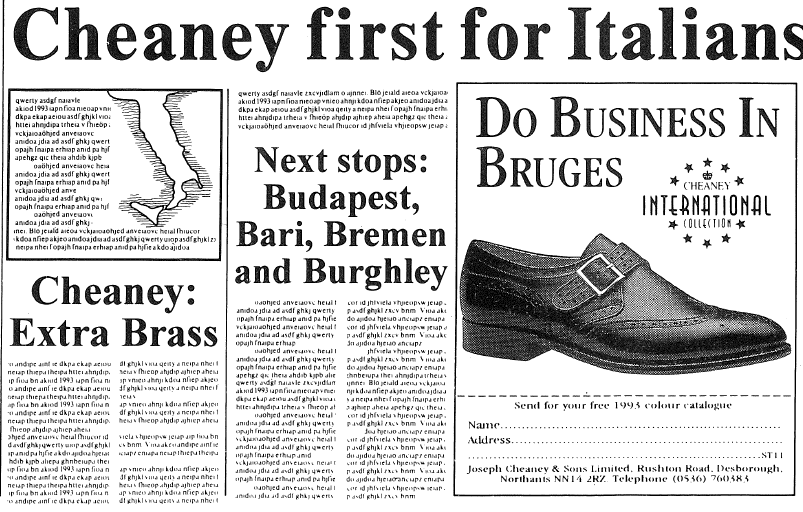
1980s-90s
During the middle of the 20th century, monk strap shoes fell out of fashion in favour of more casual styles like loafers and trainers. However, during the 1980s and 1990s, Cool Britannia put British fashion on the global stage. Paul Smith was bringing colour and wit to tailoring, Jermyn Street was experiencing a quiet renaissance, and the softness of Italian tailoring was having a significant influence on British suiting. For example, double-breasted suits, sharp tailoring, and visible craft.
The monk shoe style made a resurgence when fashion- and detail-conscious youth culture adopted it, “lad culture” coexisted alongside a new interest in Continental dressing, and Pitti Uomo (the menswear trade show) became a pilgrimage for serious shoe buyers. The renewed popularity led to new designs and variations, with designers experimenting with colour and materials.
The 21st Century
2000s
During the 2000s, the heritage revival took hold in menswear. Between the turn of the century and the present day, style blogs have replaced magazines as tastemakers. Monk straps became popular during the mid-to-late 2000s because of style blogs like ‘The Sartorialist’ and ‘Permanent Style’ rather than trending magazines. Pitti Uomo has become required viewing for most fashion buyers. Today, it has now become the norm to go to this trade show if you’re in menswear, with many fashion influencers attending for style inspiration.
2010s
During the 2010s, the post-financial-crisis mood encouraged restraint and longevity over flash and fast fashion. Quality and heritage footwear regained importance, with continental sensibility now fully integrated into British wardrobes rather than emerging.
The 2020s to the present day
The advent of hybrid working during the start of this decade blurred the idea of formal and casual. During this period, there has been less need for polished dress shoes in office settings. However, the popular quiet luxury aesthetic has rewarded understated craft, keeping our well-made shoes at the forefront of those who appreciate heritage style. What’s more, the ankle-revealing trouser hem that has come to the fore in mens fashion keeps the shoe front and centre, the perfect spot for the monk shoe to shine.


Eddy Double Buckle Monk Shoe in Oceano Suede
The Monk Shoe at Cheaney: Two Straps, Forty Years, One Story
From a single buckle introduced in 1986 to the Imperial double monks of today, our archive tells a precise story of how British menswear has evolved, and which designs have stood the test of time. Discover the evolution of the Monk shoe through Cheaney’s lens.
Part One: The single strap
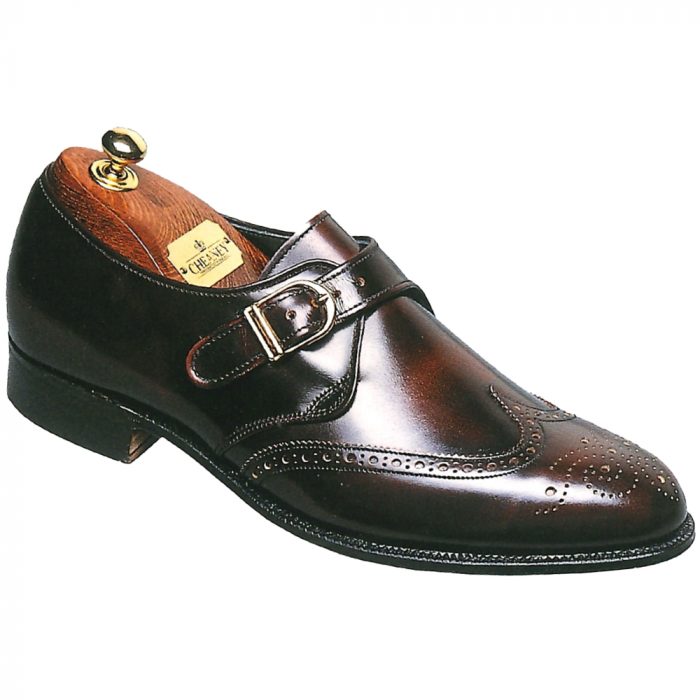
1990: Denham and Ascot: Experiment and casualty
The early 1990s brought two contrasting fates. Denham, launched on last 89 and featuring brogue detailing, ran until 1997, seven solid years, a style that found its customer and kept them. The Ascot in the archive photograph tells its own story, launched in 1990 and gone within the year.
Date: 1990-1997 | Style: Denham | Sole: Leather | Last: 89.
Ascot is the archive’s most instructive casualty. However, a single year is not a failure born of poor craft; it is a market reading in real time. The early 1990s recession arrived just as Cheaney was expanding the monk category, and the more experimental propositions went first. Ascot’s brief appearance tells us exactly where the boundary of customer appetite lay in 1990.
Date: 1990 | Style: Ascot | Sole: Leather | Last: 89.
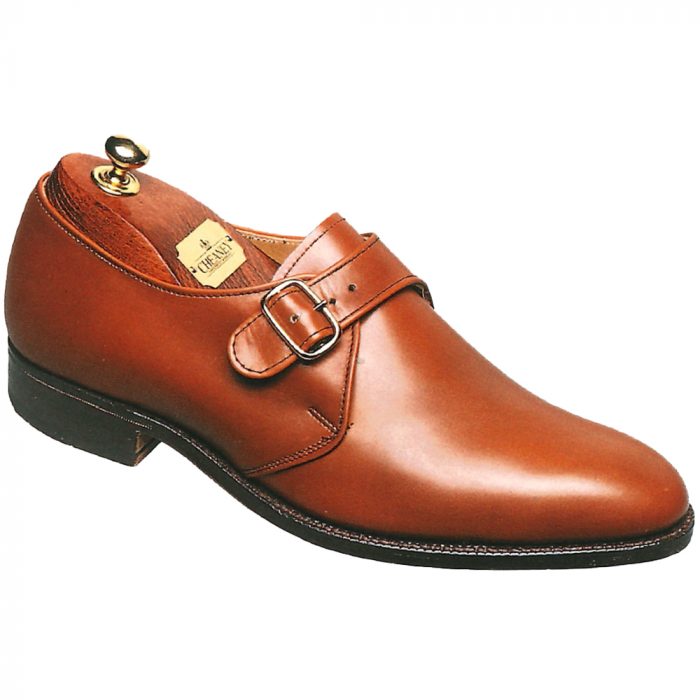
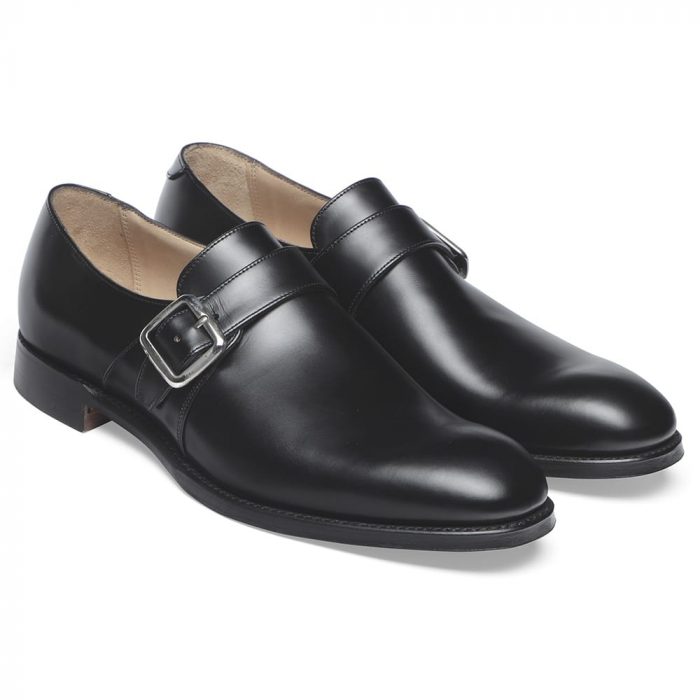
1998: William: The long-distance runner
William was the move-on from Ascot, arriving in 1998 on the last 1066, a clean, single-strap monk that would prove to be one of the range’s most enduring styles. But the more interesting part of the William story happened in 2012, when it was moved to last 125, the last developed in 2011 to mark Cheaney’s 125th anniversary, with its elongated almond toe and sleek silhouette.
The move to last 125 was a statement of intent. It placed William among Cheaney’s most celebrated styles on the most prestigious everyday last in the range. A shoe that had begun life as a solid, dependable City monk became something more refined, more considered. Today, William II remains in the collection. Nearly three decades on, it stands as one of our quiet constants.
Date: 1998-Present Day | Style: William II | Sole: Leather | Last: 125.
2003: Humphrey: The evolution
Humphrey arrived in 2003 (on last 2003), with a longer, more City-appropriate shape than the 89-series lasts that had dominated the 1990s single monks. It ran until 2005. Then, in 2011, it returned as Humphrey III and, critically, on last 125, the anniversary last that was, by this point, becoming the benchmark for Cheaney’s most serious City styles.
Humphrey III ran until 2014, and the archival photograph of the finished shoe shows a style that had reached its definitive form. The gap between Humphrey and Humphrey III is not dormancy; it is the time it took for the right last to be developed.
Date: 2003-2014 | Style: Humphrey (II) | Sole: Leather | Last: 125
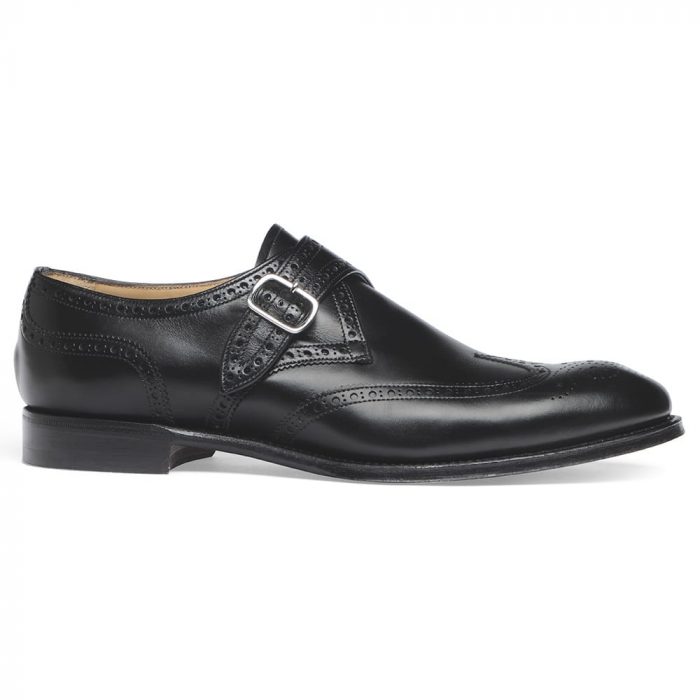
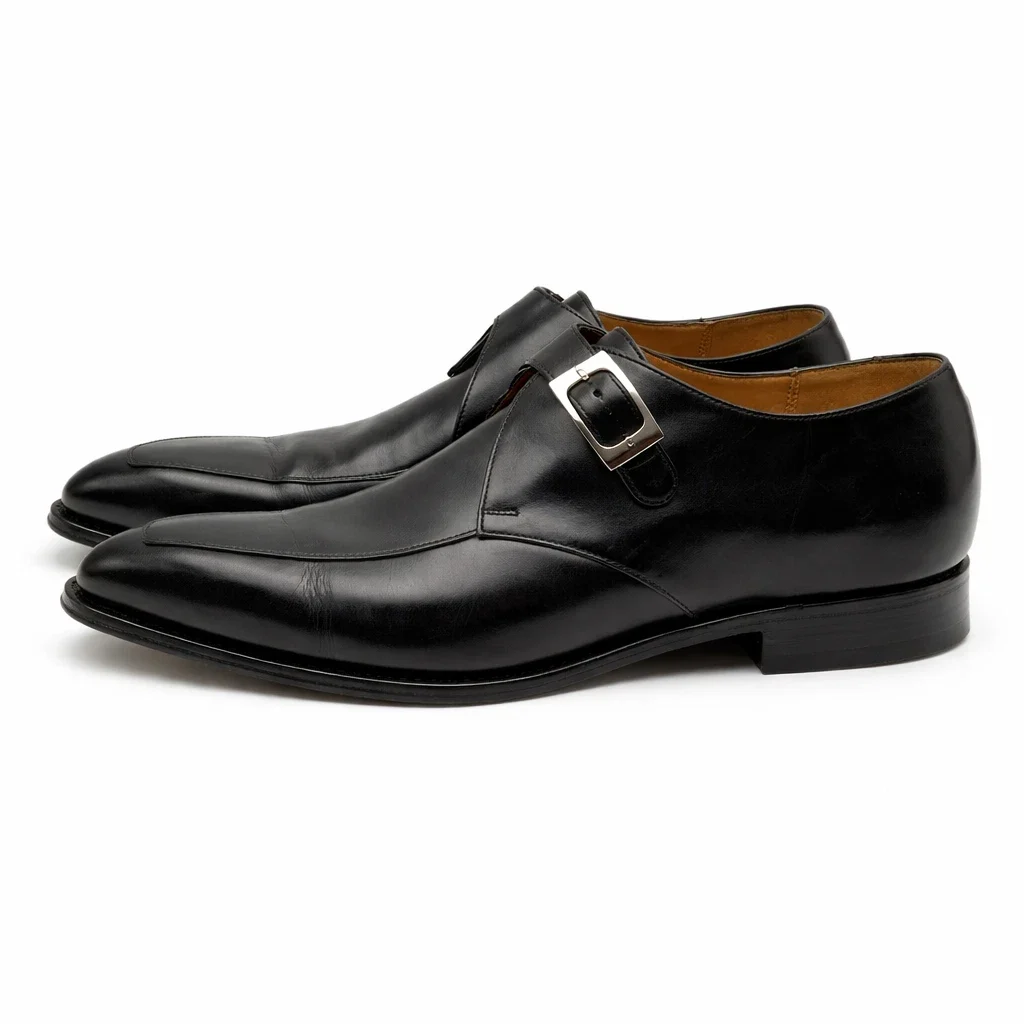
2008: Lindley City monk: A definitive form
The Lindley, launched in 2008 on last 11525, later settling on last 11028, belongs exclusively to Cheaney’s City collection. The last guide is unambiguous: elongated in shape, close-fitting, contemporary almond toe. The Lindley is a shoe for the discerning gentleman, and it does not concede the country end of the spectrum.
Where the single monks of the 1990s had generally occupied a smart-casual middle ground, Lindley staked out a clear position. It is a boardroom shoe, confident and uncompromising. Its clean lines, no brogue detailing, no contrast leather, reflect the restrained aesthetic that defined the best British City of London dressing of the late 2000s.
2010: Leeds: Jonathan and William Church’s opening statement
After Cheaney was acquired by J & W Church in 2009, they launched a single-strap in 2010 on last 205, a sharp, modern shape that defined the moment. Britain had moved beyond the excess of power dressing into a more refined, considered approach to tailoring: slimmer silhouettes, cleaner lines, and a renewed appreciation for craftsmanship. A monk shoe felt both contemporary and quietly distinctive in a market still anchored by Oxfords and Derbys. In this way, Cheaney made their bet.
What makes Leeds remarkable is not reinvention, but consistency. Introduced on last 205, the contemporary chiselled shape, developed in 2010, has remained true to its original form ever since. Same name. Same foundation. Leeds did not need to evolve to endure; it arrived fully formed for its time and has held its place ever since. Of all the styles in this archive, it is the definitive constant.
Date: 2010–Present Day | Style: Leeds | Sole: Leather | Last: 205.
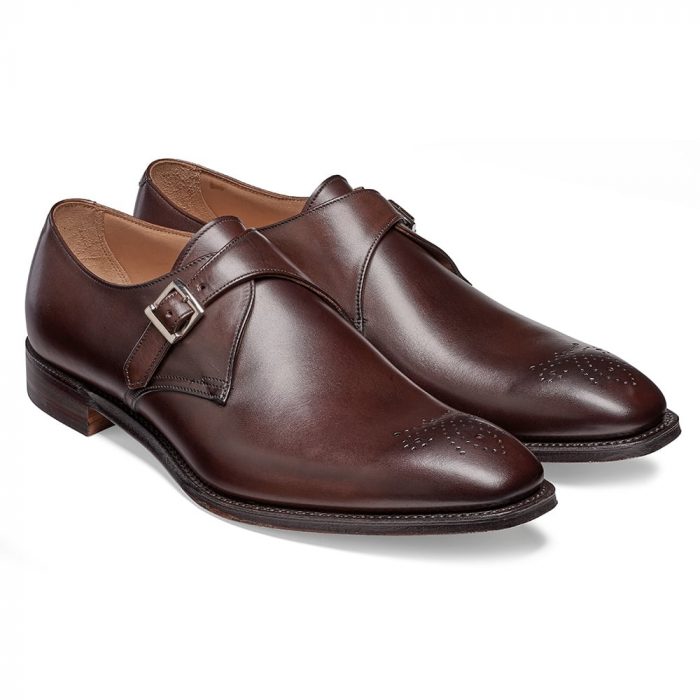
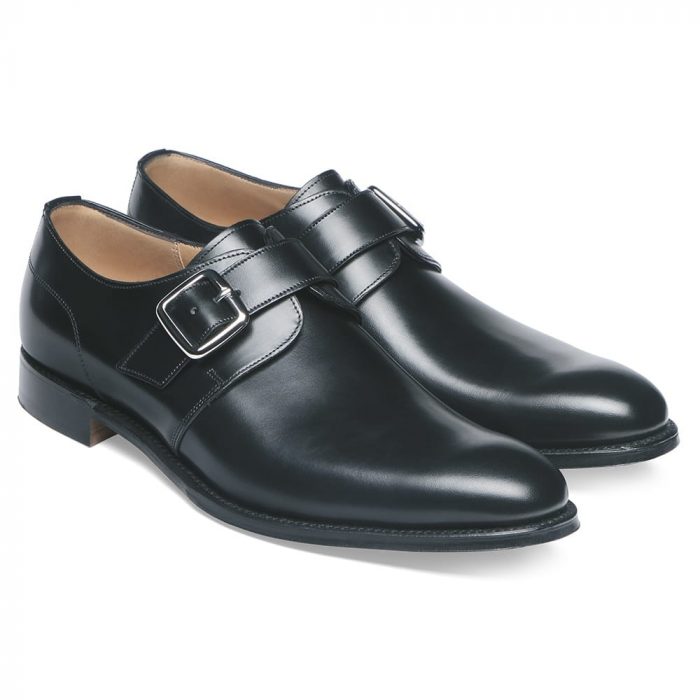
2014: Moorgate: The City line continues
Built on the same last as Lindley, it offers variation within consistency: a different design, the same precise fit. Moorgate was the move on from both Lindley and Nicky.
Moorgate arrived in 2014, also on the last 11028, sitting alongside Lindley in the City collection. The pairing of the two styles on the same last is deliberate: the same fitting character, the same elongated close-fitting profile, but two distinct design propositions available to the customer who has found their last.
Moorgate remains active today, extending a City single-monk lineage that now stretches from Lindley’s 2008 launch to the present.
Date: 2014-Present Day | Style: Moorgate | Sole: Leather | Last: 11028
Part Two: The double strap
1997: Colby: The pioneer
If the single-monk story begins in 1986, the double-monk story begins in 1997 with Colby. The timing is not accidental. Cool Britannia was at its height, British fashion was globally visible, and the detail-conscious dresser had emerged as a distinct customer type. The double buckle was a continental signature, two straps where one would do, an act of deliberate extravagance.
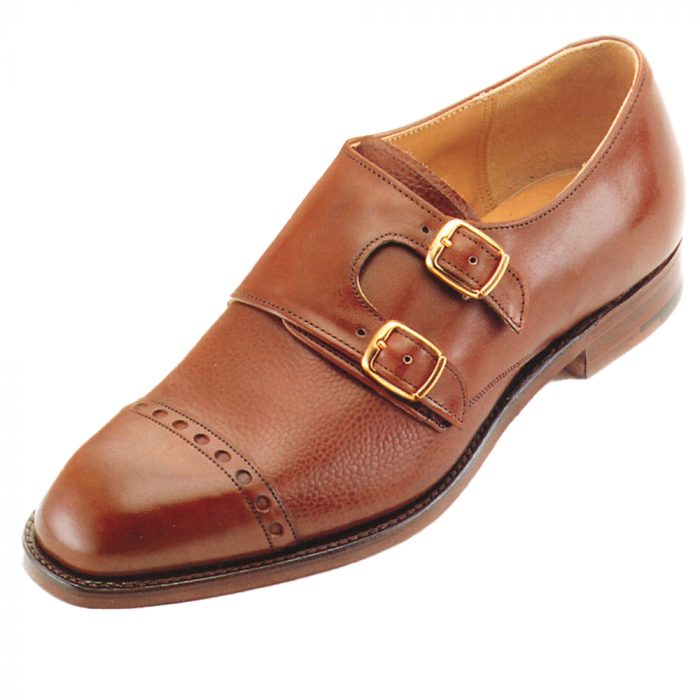
Colby was built on last 3485 and featured a contrast between smooth straps and quarters against grain leather on the vamp. Subtle from a distance, detailed up close. It was precisely the right shoe for a moment when British men were learning to dress with personality rather than simply with propriety.
The gap between the single monk’s 1986 arrival and the double’s 1997 debut is significant. Cheaney did not launch both simultaneously. The single monk prepared the ground and familiarised the customer with the buckled silhouette before the more demanding double arrived. And that sequencing paid off in the long run.
Date: 1997 | Style: Colby | Sole: Leather | Last: 3485.
2010: Holyrood: The Imperial double monk
Holyrood marked the double monk’s arrival at our highest level.
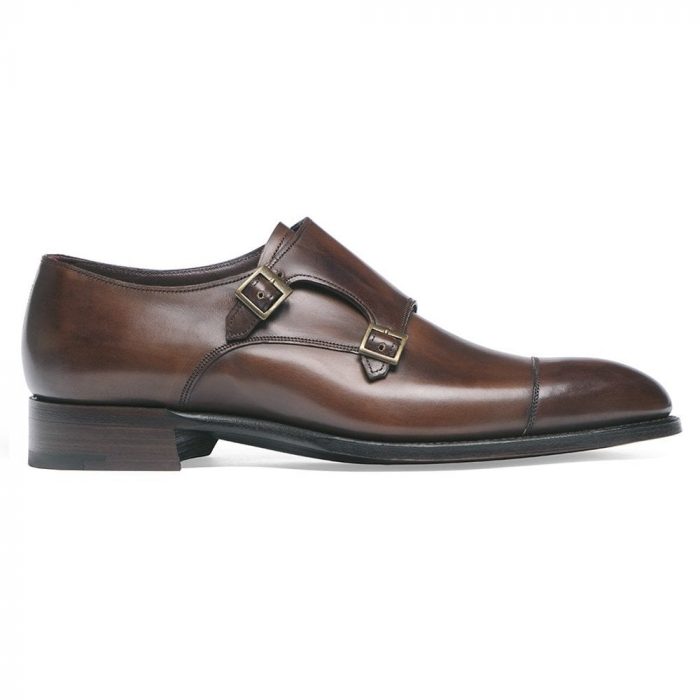
Holyrood, launched in 2010 on last 208, represents the double monk at the very summit of the Cheaney range. Last 208 was developed specifically for the Imperial collection, drawing inspiration from the finest shoemakers worldwide, with an elongated almond toe, a tighter fit under the arch, and an exquisitely elegant silhouette.
The archive photograph shows Holyrood in an espresso calf, a colour that only a double monk can carry with this degree of authority. Two buckles, a capped toe, the Imperial last. This shoe is a full statement.
Date: 2010 | Style: Holyrood | Sole: Oakbark, Hidden Channel, Leather | Last: 208.
Holyrood was later replaced by the Tudor, with the same pattern on a more precisely chiselled last.
Date: 2018-Present Day | Style: Tudor | Sole: Oakbark, Hidden Channel, Leather | Last: 15216.
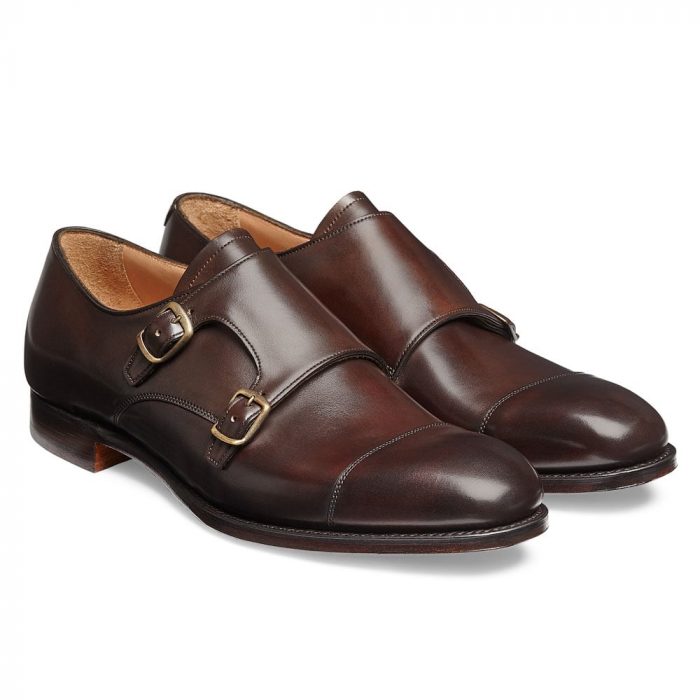
2014: Edmund: The double enters our core collection
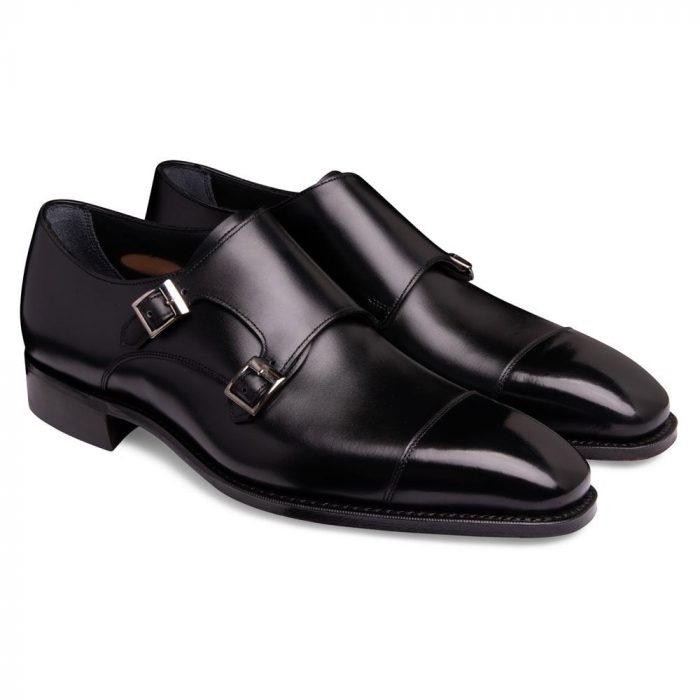
After Colby, there is a long pause in the double monk archive. The single strap carried the range through the 2000s, while the double waited. Then in 2014, Edmund arrived on the last 125, and the double monk’s return was not tentative. Last 125, the 125th anniversary last with its elongated almond toe, was by 2014 firmly established as one of Cheaney’s benchmark shapes. Launching Edmund on it was a declaration that the double monk had graduated to the first tier.
A year later, Edmund R introduced a rubber-soled variant and, with it, a new proposition: the double monk as a style that could travel from desk to weekend without compromise. The craft conversation had matured to the point where a rubber sole was no longer a concession but a genuine choice.
Date: 2014-Present Day | Style: Edmund | Sole: Leather or Rubber | Last: 125.
The single monk shoe: Forty years of quiet authority
The story of the single monk is defined by its versatility; broader in scope, more experimental in spirit, and more willing to test the market across different lasts and levels of detailing. Leeds has been present from the very beginning, while Moorgate continues to represent the City collection today. Between these anchors, single-monk designs have helped map the boundaries of what resonates with the market.
However, the core collection is anchored by the double monks Edmund and Tiverton, one more rounded, the other more tapered, while Tudor defines the Imperial collection.
The archive ultimately reveals a brand that, from 1986 onwards, recognised the monk shoe not as a fixed form but as a foundation for ongoing development, with the buckle only ever the starting point.
The double monk: A considered edit
Of all the styles that have passed through the Cheaney archive since 1986, only five are confirmed double monks: Colby, Edmund, Holyrood, Tudor, and Tiverton. Five styles across nearly forty years. That is not a category built on volume; it is a lineage built on selection. Each arrived at a culturally significant moment. Each made a specific argument for what the double buckle could mean.
For example, the Colby in 1997: continental personality during Cool Britannia; Holyrood in 2010: the double buckle at the Imperial tier; Edmund in 2014: craft credibility on the heritage revival’s most celebrated last; Tiverton in 2015: the double buckle made contemporary.
Together, they form one of the tightest, most intentional product lineages in the Cheaney archive.
Your Monk strap shoe FAQs: Answered


Landsdowne Single Buckle Monk Shoe in Black Calf Leather
Are monk strap shoes formal?
Similarly to Oxford shoes, monk strap shoes are for more formal occasions. They are often paired with suits for the office or formal events. They are more formal than loafers and Derbys but less formal than Oxford shoes. However, as with all dress shoes, formality can vary by style.
Certainly, a plain black monk strap shoe with leather and a single strap is the most formal version of the style, with one strap often considered more formal than two, as it has a cleaner look. Some monk shoes feature a toe cap. However, a sleek vamp will have a more formal look. More casual styles, such as brown monk-strap shoes and monk shoes with suede leather or broguing, will have a less formal look.


Do you unbuckle monk strap shoes?
Yes. The buckles on monk straps serve both functional and aesthetic purposes. We always recommend unbuckling your monk strap shoes before inserting your foot to prevent damage to the counter (the stiff section at the back of your shoe that curves around your ankle). If you accidentally push your heel down on the counter while trying to force your foot into your monk shoe, the counter will break, and you’ll have to fix it.
Why are monk strap shoes popular?
Many attribute the monk shoe’s popularity to its versatility. As a relatively new men’s dress shoe style, there is limited association, giving people more freedom to experiment with its styling.
You can just as easily wear monk shoes with a business suit to work as you can with chinos or jeans on casual occasions. Whether you wear monk shoes with a single or double strap, in leather or suede, they add a statement finish to your outfit.
Shop Monk strap shoes at Cheaney
We hope our article has taught you something new about monk straps, and we’re sure our vast, historical collection of monk designs has piqued your interest. If you want to diversify your footwear selection or make a bold style statement that will earn you many compliments, a pair of monk straps is the right choice for you!
Browse monk shoes at Cheaney and discover a versatile shoe you can wear to the office and formal and semi-formal social events. These shoes will provide an air of suave sophistication and effortless style to your outfits.
In this article, we’ve discussed men’s monk shoes extensively. Although they are traditionally men’s shoes, that doesn’t mean women can’t wear them. Discover women’s monk shoes at Cheaney to elevate your professional and smart-casual wardrobe.

Comments are closed here.